Menu
Y-DNA Haplogroup • Paternal Lineage

N1A1A1A1A

Y-DNA Haplogroup N1A1A1A1A

~2,000 years ago
Northeastern Europe / Fennoscandia (derived from a Siberian source)
4 subclades
3 ancient samples
Scroll to explore
Chapter I

The Story

The journey of Y-DNA haplogroup N1A1A1A1A

Origins and Evolution

Y‑DNA haplogroup N1A1A1A1A is a terminal branch within the broader N1 (N1a/N1c-style) radiation that emerged from a Northeast Eurasian/Siberian source. The parent clade (N1A1A1A1) is estimated to have diversified during the Bronze Age (~3.5 kya) in northeastern Eurasia or western Siberia; N1A1A1A1A represents a later, geographically more northerly diversification that likely formed within the last ~2,000 years as populations moved and localized in Fennoscandia and the Baltic littoral. Phylogenetically, this clade carries derived SNPs downstream of the N1A1A1A1 backbone and is detected repeatedly in modern northern European and some Siberian groups.

Subclades

As a relatively terminal branch, N1A1A1A1A may itself have small local subbranches that are identifiable with high-resolution SNP testing; in many available datasets it appears as a coherent cluster rather than a very deep, highly subdivided lineage. Ancient DNA records (approximately 20 reported ancient samples containing this or very close downstream markers in curated databases) show that the clade has been present in archaeological contexts across the Baltic–Fennoscandian zone and northern Russia, consistent with local persistence and periodic demographic growth.

Geographical Distribution

The modern distribution of N1A1A1A1A is concentrated in northern Eurasia. Highest frequencies are observed in Finland and among some Fennoscandian groups (including Sámi), with substantial presence along the Baltic littoral (Estonia, Latvia) and in parts of northern European Russia. It is also found among several indigenous Siberian groups (Nenets, Evenks, Yakuts) at moderate frequencies, reflecting either older east–west continuity of N1 lineages or later gene flow between northern Eurasian groups. Low frequencies are observed in adjacent Uralic‑speaking populations further south (for example a minority of Hungarians) and sporadically in northeast Asian samples.

Historical and Cultural Significance

The geographic pattern and co‑occurrence with Uralic language families support a strong association between N1A1A1A1A and north Eurasian, often Uralic‑speaking, populations. While N‑lineages more broadly have been implicated in post‑Neolithic northward expansions and the spread of Uralic languages, N1A1A1A1A itself appears to represent a more localized northern branch that rose to higher frequency through founder effects and drift in sparsely populated high‑latitude regions. Archaeologically, its presence alongside Comb Ceramic and later northern Bronze/Iron Age cultural horizons is plausible; however, it is not a marker of the large steppe migrations (e.g., Yamnaya) that carried R1b/R1a, but rather signals different demographic processes tied to forest‑and‑tundra adaptations and small‑scale expansions.

Conclusion

N1A1A1A1A is a northern, Uralic‑linked terminal branch of the N1 family that reflects relatively recent (Holocene to late Holocene) demographic history in Fennoscandia, the Baltic coast and parts of northern Russia and Siberia. It is most informative for studies of population structure, language‑family correlations and post‑Bronze Age demographic events in northern Eurasia, and its detection in both modern and ancient samples helps trace north Eurasian continuity and local founder events.

Key Points

  • Origins and Evolution
  • Subclades
  • Geographical Distribution
  • Historical and Cultural Significance
  • Conclusion
Chapter II

Tree & Relationships

Phylogenetic context and subclades

Evolution Path

This haplogroup's evolutionary journey from its earliest ancestor to the present.

Steps Haplogroup Age Estimate Archaeology Era Time Passed Immediate Descendants Tested Modern Descendants Ancient Connections
1 N1A1A1A1A Current ~2,000 years ago 🏛️ Roman Period 2,000 years 4 2 3
Chapter III

Where in the World

Geographic distribution and modern presence

Place of Origin

Northeastern Europe / Fennoscandia (derived from a Siberian source)

Modern Distribution

The populations where Y-DNA haplogroup N1A1A1A1A is found include:

  1. Finns and other Northern Europeans (notably in Finland)
  2. Saami and other Fennoscandian groups
  3. Estonians, Latvians and some coastal Baltic populations
  4. Northern Russians and Komi
  5. Indigenous Siberian peoples (e.g., Nenets, Evenks, Yakuts)
  6. Some Uralic‑speaking populations outside the north (low frequency, e.g., Hungarians)
  7. Low frequencies in adjacent Northeast Asian groups (northern Mongolian and northern Han Chinese samples)

Regional Presence

Northern Europe / Fennoscandia High
Baltic littoral High
Northern European Russia Moderate
Northern Siberia Moderate
Adjacent Northeast Asia Low
CHAPTER IV

When in Time

Your haplogroup in the context of human history

~10k years ago

Neolithic Revolution

Agriculture begins, settled communities form

~5k years ago

Bronze Age

Metalworking, writing, and early civilizations

~3k years ago

Iron Age

Iron tools, expanded trade networks

~2k years ago

Classical Antiquity

Greek and Roman civilizations flourish

~2k years ago

Haplogroup N1A1A1A1A

Your Y-DNA haplogroup emerged in Northeastern Europe / Fennoscandia (derived from a Siberian source)

Northeastern Europe / Fennoscandia (derived from a Siberian source)
Present

Present Day

Modern era

Your Haplogroup
Historical Era
Chapter IV-B

Linked Cultures

Ancient cultures associated with Y-DNA haplogroup N1A1A1A1A

Cultural Heritage

These ancient cultures have been linked to haplogroup N1A1A1A1A based on matching ancient DNA samples from archaeological excavations. The presence of this haplogroup in these cultures provides insights into the migrations and population movements of populations carrying this haplogroup.

Avar Culture Early Avar Irkutsk Culture Nordic Iron Age Post-Medieval Swedish Pre-Viking Swedish Slab Grave Culture Sukhbaatar Culture Viking Viking Culture
Culture assignments are based on archaeological context of ancient DNA samples and may represent regional associations during specific time periods.
Chapter V

Sample Catalog

Top 3 ancient DNA samples directly related to haplogroup N1A1A1A1A or parent clades

3 / 3 samples
Portrait Sample Country Era Date Culture Y-DNA Match
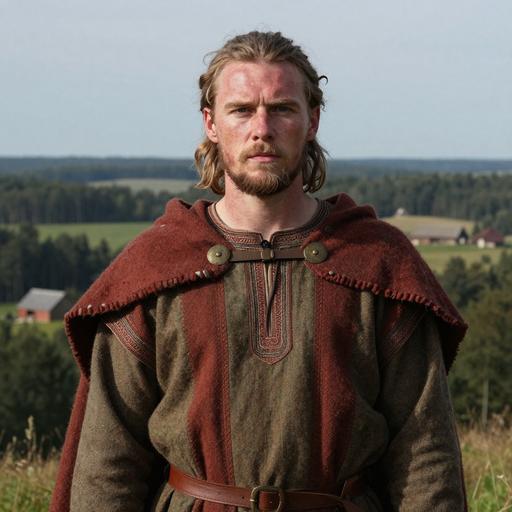
Portrait of ancient individual VK579 from Sweden, dated 200 CE - 400 CE
VK579
Sweden Iron Age Sweden 200 CE - 400 CE Nordic Iron Age N1a1a1a1a Direct
Portrait of ancient individual A1808 from Hungary, dated 600 CE - 640 CE
A1808
Hungary Early Avar Period Danube-Tisza, Hungary 600 CE - 640 CE Early Avar N1a1a1a1a Direct
Portrait of ancient individual A1820 from Hungary, dated 630 CE - 670 CE
A1820
Hungary Early Avar Period Danube-Tisza, Hungary 630 CE - 670 CE Early Avar N1a1a1a1a Direct
Chapter VI

Carrier Distribution Map

Geographic distribution of 3 ancient DNA samples carrying haplogroup N1A1A1A1A

Time Period Filter
All Time Periods
Showing all samples
Each marker represents an ancient individual
Chapter VII

Temporal Distribution

Distribution of carriers across archaeological periods

Chapter VIII

Geographic Distribution

Distribution of carriers by country of origin

Chapter IX

Country × Era Distribution

Cross-tabulation of carrier countries and archaeological periods

Data

Data & Provenance

Source information and data quality

Last Updated 2026-02-16
Confidence Score 50/100
Coverage Low
Data Source

We use the latest phylotree for YDNA haplogroup classification and data.