The Story
The journey of Y-DNA haplogroup N1A1A1A1A4
Origins and Evolution
Y-DNA haplogroup N1A1A1A1A4 is a downstream branch of N1A1A1A1A, itself part of the broader N1 lineage that expanded across northeastern Eurasia. Based on its placement in the phylogeny just below N1A1A1A1A (a lineage with a documented Bronze Age–to–Iron Age presence in northern Eurasia), N1A1A1A1A4 is best interpreted as a relatively recent diversification that likely occurred in the first millennium CE (on the order of ~1.2 kya). The pattern of downstream diversity and the modern geographic concentrations point to a local emergence in northern Fennoscandia, the eastern Baltic littoral, or nearby parts of northwestern Russia from a source population that had previously acquired N1 ancestry during earlier Siberian-to-northeast European movements.
Subclades (if applicable)
As a fine-grained terminal clade, N1A1A1A1A4 may contain additional short-branched sublineages identifiable by further SNP discovery and deep sequencing. At present, available phylogenies place N1A1A1A1A4 as a downstream terminal (or near-terminal) branch under N1A1A1A1A; therefore the immediate substructure is limited in documented datasets. Continued sampling in Sámi, Finnish, Karelian, Komi and northern Russian populations is likely to reveal further microclades and help resolve its internal phylogeography.
Geographical Distribution
The modern distribution of N1A1A1A1A4 is concentrated in northern and northeastern Europe with sporadic low-frequency detections in adjacent Siberian and northeast Asian groups. Highest frequencies are observed among northern Finnic- and Sámi-associated populations and in parts of northwest Russia, with lower but detectable occurrences in coastal Baltic populations and some Uralic-speaking groups further south (likely due to later gene flow). The distribution is consistent with a local origin in Fennoscandia or the Baltic/northern Russian littoral followed by limited medieval and post-medieval dispersals along coastal and riverine trade and migration corridors.
Historical and Cultural Significance
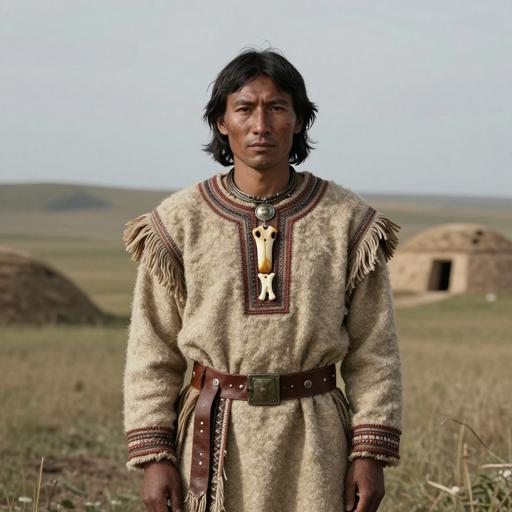
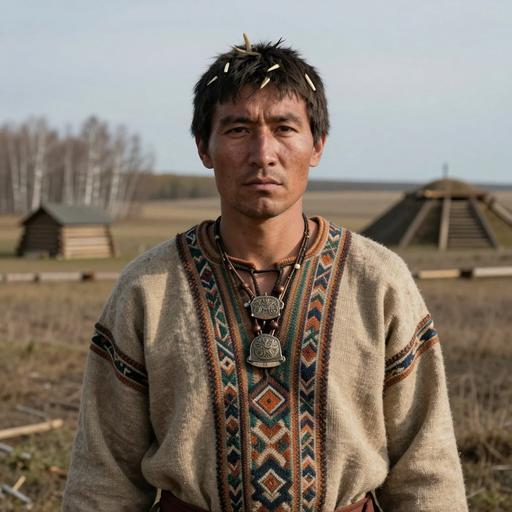
Because N1A1A1A1A4 is a recent derivative of a broader northern Eurasian lineage, its history is tightly linked to late Iron Age and medieval demographic processes in northern Europe. The clade's concentration among Sámi and northern Finnic groups suggests it contributed to the paternal heritage of populations adapted to boreal environments and participating in northern trade networks (e.g., Arctic coastal and riverine routes). Its presence at low levels in adjacent Uralic- and Turkic-speaking populations likely reflects secondary contacts and gene flow across the forest-tundra and taiga zones during the first and second millennia CE.
Conclusion
N1A1A1A1A4 represents a microregional northern Eurasian paternal lineage that diversified after the Bronze Age spread of N1-derived lineages, with a probable origin in Fennoscandia or nearby northern Russia around ~1.2 kya. It is most informative for studies of recent population structure in northern Europe, the genetic history of Sámi and Finnic-speaking groups, and the fine-scale migration events of the late Iron Age and medieval periods. Ongoing targeted sequencing and increased sampling in northern Eurasia will clarify its internal structure and precise demographic history.
Key Points
- Origins and Evolution
- Subclades (if applicable)
- Geographical Distribution
- Historical and Cultural Significance
- Conclusion