The Story
The journey of mtDNA haplogroup D4E4
Origins and Evolution
mtDNA haplogroup D4E4 falls within the D4 clade, a deeply rooted East/Northeast Asian maternal lineage. The parental clade D4E likely diversified soon after the Last Glacial Maximum (post-LGM), and D4E4 is best interpreted as a downstream branch that formed during the Late Upper Paleolithic to early Holocene period in Northeast/East Asia. Based on the phylogenetic position of D4E4 under D4E and the documented ages of closely related D4 subclades, a plausible time to most recent common ancestor (TMRCA) for D4E4 is in the order of ~12 kya, reflecting post-LGM expansions and localized differentiation.
Subclades (if applicable)
At present, D4E4 appears to be a relatively low-frequency branch with limited deep substructure described in public databases and the literature. A small number of internal variants have been reported in modern and ancient samples, but the scarcity of well-sampled complete mitogenomes means that formal naming of multiple robust subclades under D4E4 is still incomplete. Increased whole-mitochondrial sequencing and ancient DNA sampling from Northeast Asia and the Russian Far East will be necessary to resolve finer-scale subclades and demographic events within D4E4.
Geographical Distribution
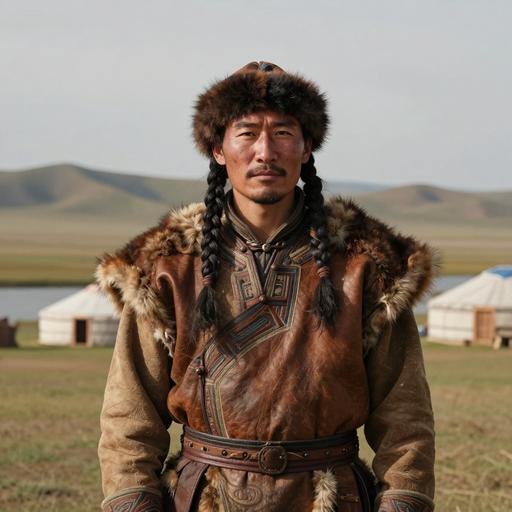
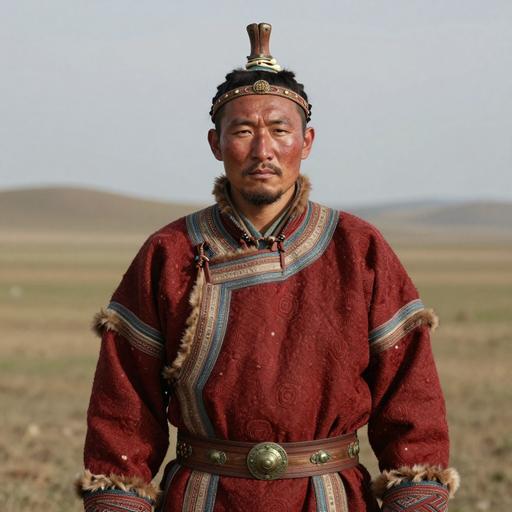
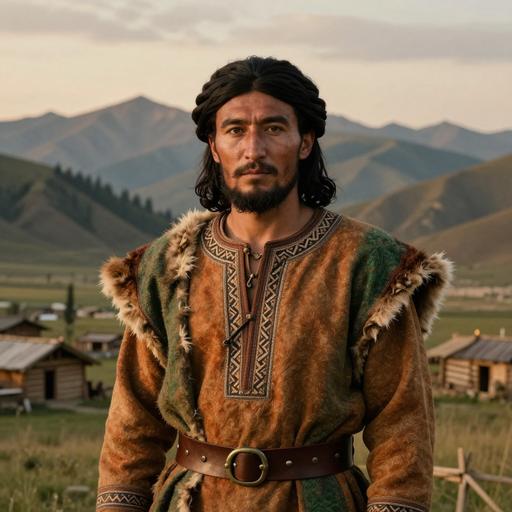
D4E4 shows its highest concentrations in Northeast Asia and the Russian Far East, with occurrences in Japan (including populations with Jomon ancestry), Korea, and Han Chinese groups. It is also present among Indigenous Siberian populations (for example, Yakut, Evenk, and Nivkh) and at lower frequencies in some Mongolic and Turkic-speaking groups of Central Asia. Sporadic low-frequency occurrences appear in parts of coastal Southeast Asia and in maritime contact zones where historic admixture has introduced Northeast Asian maternal lineages. Ancient DNA recovered from archaeological contexts has identified D4E4 in a small number (four) of ancient samples, supporting its antiquity in the region.
Historical and Cultural Significance
The distribution of D4E4 is consistent with female-line continuity among northeastern Eurasian hunter-gatherer and early Holocene populations. Its presence in Jomon-associated remains and modern populations of northeastern Japan suggests participation in the maternal ancestry of island and continental forager populations that persisted through the Holocene. In Siberia and the Russian Far East, D4E4 likely represents part of the maternal genetic substrate that later interacted with expansions of pastoralist and agrarian groups, but it remained more regionally concentrated than some pan-Eurasian mtDNA lineages. The haplogroup's low-to-moderate frequency and spotty geographic presence indicate that D4E4 was never a sweeping pan-regional maternal lineage but rather a marker of northeast Eurasian population structure and local continuity.
Conclusion
mtDNA D4E4 is a diagnostically Northeast/East Asian maternal lineage that diversified after the LGM and today marks a thread of maternal continuity across Jomon-related groups, modern Japanese/Korean/Chinese populations, and several Indigenous Siberian groups. Current evidence points to a postglacial origin in Northeast Asia, limited downstream diversification visible in modern and ancient samples, and a geographic footprint concentrated in the Russian Far East, northeastern Japan, Korea, and adjacent parts of China and Siberia. Further complete mitogenome sequencing and targeted ancient DNA sampling will clarify the internal structure and precise demographic history of D4E4.
Key Points
- Origins and Evolution
- Subclades (if applicable)
- Geographical Distribution
- Historical and Cultural Significance
- Conclusion