The Story
The journey of mtDNA haplogroup D4H1
Origins and Evolution
mtDNA haplogroup D4H1 is a downstream lineage of D4H, itself a branch of the widespread East Asian haplogroup D4. D4 lineages expanded in East Asia during and after the Last Glacial Maximum; D4H appears to have diversified in Northeast/East Asia in the Late Pleistocene (~16 kya per parent estimates), and D4H1 represents a later, regional differentiation likely dating to the Late Pleistocene–Early Holocene (here estimated ~14 kya). The clade reflects local diversification within populations that recolonized or expanded within coastal and inland corridors of Northeast Asia and southern Siberia as climates warmed.
D4H1 is defined by coding-region variants nested within the diagnostic mutations of D4 and D4H. As with many mtDNA subclades, its geographic and temporal pattern is interpreted by combining modern population surveys with ancient DNA results from archaeological contexts in East Asia and Siberia.
Subclades (if applicable)
D4H1 may include further internal branches (for example D4H1a, D4H1b in published nomenclatures) that show finer-grained geographic structure. These sub-branches often indicate local founder events or expansions in particular regions (for example, some subclades enriched in the Japanese archipelago, others more frequent among Siberian or Mongolic-speaking groups). The exact internal structure and branching times continue to be refined as more complete mitochondrial genomes are sequenced from both modern populations and ancient remains.
Geographical Distribution
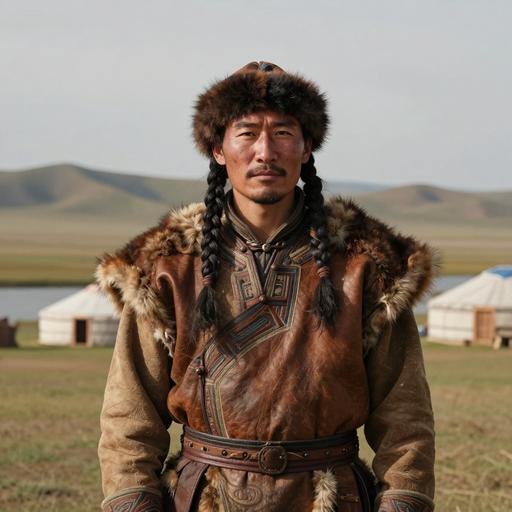
Modern distribution: D4H1 is principally detected in Northeast and East Asian populations at low-to-moderate frequency. It is reported among Han Chinese, Japanese (including connections to Jomon-derived lineages in some studies), Koreans, and multiple Siberian indigenous groups (e.g., Yakut/Sakha, Evenk, Yukaghir, and related peoples). Lower-frequency occurrences appear in some Mongolic and Turkic-speaking groups across Mongolia and parts of Central Asia, reflecting gene flow and population movements across the steppe.
Ancient DNA: Related D4H clades have been observed in Jomon-era and other early Holocene samples from Japan and coastal Northeast Asia, supporting a long-term presence of D4H-derived lineages in the region. While other branches of D4 (notably D4h3a) contributed to Native American maternal lineages, D4H1 itself is largely a Northeast Asian/Siberian lineage with limited evidence for direct presence in early American samples.
Historical and Cultural Significance
D4H1's pattern fits broadly with postglacial re-expansion scenarios in Northeast Asia — hunter-gatherer and early coastal populations that recolonized formerly glaciated or cold-steppe zones after the Last Glacial Maximum. In contexts such as the Jomon of Japan and early Holocene coastal Siberia, D4-derived lineages (including D4H subclades) appear among the mitochondrial diversity, indicating continuity or incorporation of these lineages into later regional populations.
Later cultural processes, including movements of pastoralist and agricultural groups across the Eurasian steppe and contacts during the historic period, likely redistributed D4H1 at low frequency into neighboring Central Asian and northern East Asian populations. Thus, D4H1 helps trace maternal ancestry related to ancient Northeast Asian hunter-gatherers, early Holocene coastal communities, and subsequent regional interactions.
Conclusion
D4H1 is a regional mtDNA lineage nested within the broader D4 family that documents Late Pleistocene–Holocene maternal diversification in Northeast Asia and adjacent Siberia. It is most informative for reconstructing postglacial population structure and local demographic events (founder effects, small-scale expansions, and regional continuity) in northeastern parts of Eurasia. Ongoing sequencing of complete mitochondrial genomes from both modern and ancient samples will continue to refine the internal branching and precise timings for D4H1 and its subclades.
Key Points
- Origins and Evolution
- Subclades (if applicable)
- Geographical Distribution
- Historical and Cultural Significance
- Conclusion