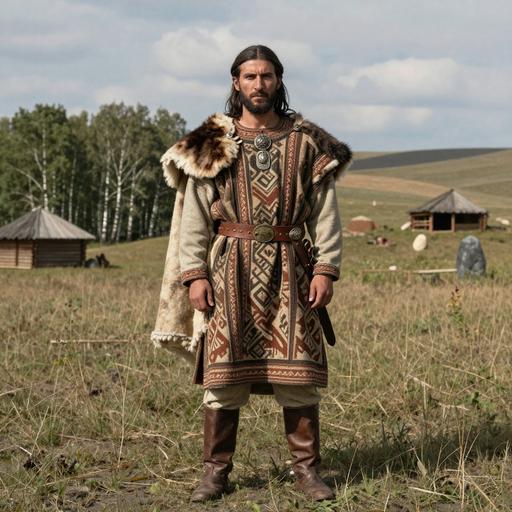
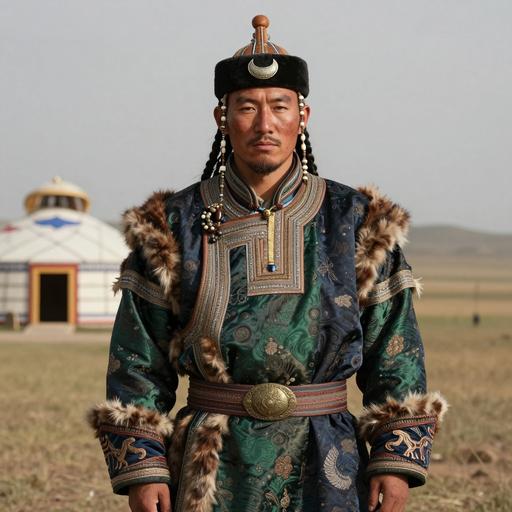
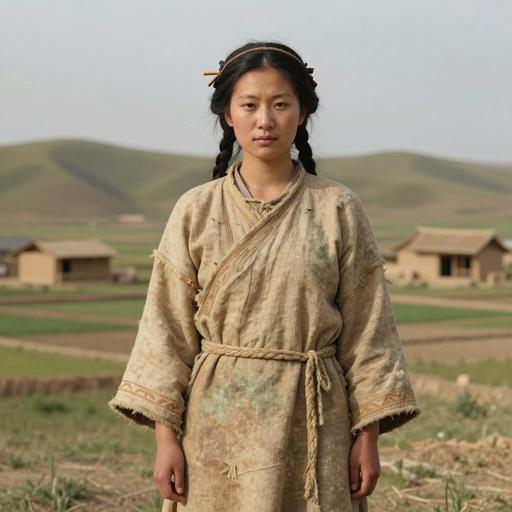
The Story
The journey of mtDNA haplogroup D4Q
Origins and Evolution
mtDNA haplogroup D4Q derives from the broader D4 lineage, a major East Asian maternal clade that began diversifying in the Late Pleistocene (~25 kya). D4Q is a more derived branch that most likely arose during the Late Glacial to early Holocene period (roughly ~12 kya by phylogenetic inference), corresponding to post-glacial population re-expansions in northeastern Asia. Because D4 diversified early in East Asian prehistory, many of its downstream lineages, including D4Q, reflect localized demographic processes such as retreat from glacial refugia, founder effects in small northern populations, and later Holocene movements.
Subclades (if applicable)
D4Q itself is a defined sublineage within the D4 phylogeny; published mitochondrial trees and population surveys indicate it is not one of the numerically dominant D4 branches but contains further internal variation in some regional studies (often labelled with additional numeric/subletter suffixes when deeper typing or full mitogenomes are available). Where full mitogenome data exist, D4Q splits into minor local subbranches that are useful for tracing regional maternal continuity in northern East Asia and parts of Central Siberia.
Geographical Distribution
D4Q is principally a northern East Asian / Siberian lineage. Modern population surveys and targeted mitogenome studies report D4Q at low to moderate frequencies among indigenous Siberian groups (for example Yakut, Evenks and neighboring Tungusic-speaking groups) and in some Mongolic and northern Han populations at lower levels. It also appears sporadically in northeastern Chinese, Korean and Japanese samples in small numbers, reflecting long-standing regional gene flow and shared maternal ancestry across Northeast Asia. D4Q is not a primary contributor to Native American founding lineages (those are primarily other D4-derived clades such as D4h3a and some D4 subbranches), and D4Q has only occasional or absent representation in the Americas.
Ancient DNA results have identified D4-derived lineages widely across Holocene northeastern Asia; D4Q in particular has been observed in a limited number of archaeological contexts in the Amur–Baikal and Russian Far East regions, consistent with continuity between prehistoric hunter-gatherer groups and present-day indigenous populations.
Historical and Cultural Significance
Because of its distribution, D4Q is informative for reconstructing maternal continuity among northern East Asian hunter-gatherers, early Holocene recolonization of Siberia after the Last Glacial Maximum, and later contacts among Tungusic, Mongolic and some northern East Asian farming populations. It can serve as a regional marker in studies of population structure in the Amur and Baikal regions and complements other northern mtDNA lineages (A, C, and other D4 subclades) when interpreting migration and admixture patterns.
D4Q is not strongly associated with any single large pan-regional archaeological culture (unlike some widespread lineages associated with major farming expansions), but it appears in contexts connected to Neolithic and later hunter-gatherer and coastal groups of northeast Asia and persists into historic indigenous groups of Siberia and the Russian Far East.
Conclusion
In summary, mtDNA D4Q represents a geographically focused, derived branch of the D4 family that most likely originated in northeast Asia / Siberia during the early Holocene. It is primarily of interest for studies of northern East Asian maternal ancestry, regional continuity through the Holocene, and the fine-scale population history of Siberian and adjacent Northeast Asian peoples. As more full mitogenomes are sequenced from under-sampled northern populations and ancient remains, the internal structure and precise age estimates for D4Q will be refined further.
Key Points
- Origins and Evolution
- Subclades (if applicable)
- Geographical Distribution
- Historical and Cultural Significance
- Conclusion