The Story
The journey of mtDNA haplogroup N1A1A1A3
Origins and Evolution
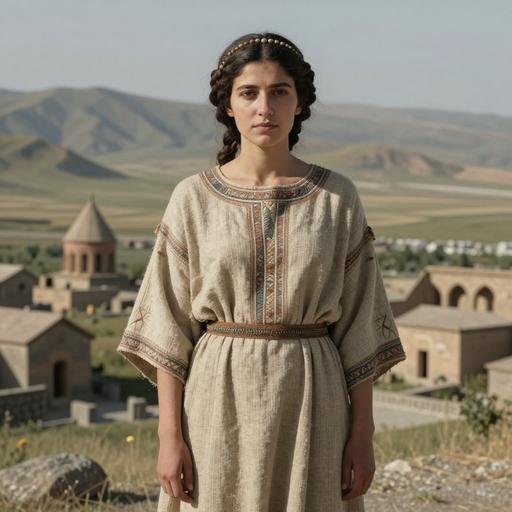
N1A1A1A3 is a downstream subclade of the broader N1a-derived cluster that is strongly associated with Early Neolithic farming populations originating in Anatolia and the Near East. Given its phylogenetic position under N1A1A1A, which is estimated to have formed during the Early Neolithic expansion from the Near East (~7 kya), N1A1A1A3 most probably arose after the initial farmer dispersals — plausibly in Anatolia or in early Neolithic communities at the Anatolia–Levant interface — and dates to the mid- to late-Neolithic or early post-Neolithic period (on the order of ~5 kya, recognizing substantial uncertainty given limited sampling).
Mutational markers that define N1A1A1A3 place it as a relatively derived branch within the N1a family. Like many N1a sublineages, it reflects a maternal legacy tied to the demographic movements of agriculturalists rather than Paleolithic hunter-gatherers.
Subclades (if applicable)
At present N1A1A1A3 is a narrowly defined terminal or near-terminal subclade in published phylogenies and ancient DNA datasets. Because sampling of N1a sublineages remains incomplete, especially for rare subclades, small internal subdivisions may exist but are not yet well represented in public ancient or modern mtDNA databases. Continued sequencing of complete mitogenomes from Neolithic, Chalcolithic, and later contexts in Anatolia, the Levant, the Aegean and Mediterranean will clarify any internal structure beneath N1A1A1A3.
Geographical Distribution
Ancient DNA: N1a-derived lineages, including branches of N1A1A1A, are repeatedly observed in Early Neolithic assemblages across Anatolia and Neolithic Europe (LBK, Cardial-related groups). N1A1A1A3 itself appears only sporadically in published ancient datasets, consistent with a modest presence among farmer-associated maternal lineages.
Modern populations: Today N1A1A1A3 is rare. Modern occurrences most likely cluster at low frequency in: Anatolia and the Levant, parts of southern Europe (coasts of Italy, Greece and western Iberia in fringe cases), coastal North Africa and the Maghreb, the Horn of Africa (where specific N1a sublineages have been reported), and sporadically in the Caucasus and Central Asia where historical contact and later migrations created admixture avenues.
The observed pattern — concentrated origin in the Near East with low-frequency downstream presence across Mediterranean and adjacent regions — mirrors the demographic signature of many farmer-associated maternal haplogroups that expanded in the Neolithic and were later reduced in frequency by Bronze Age and historic population movements.
Historical and Cultural Significance
Because N1A1A1A3 is embedded within the Early Neolithic N1a radiation, it is informative for understanding maternal contributions to the farming transition in West Eurasia. Its presence in contexts associated with Anatolian Neolithic cultures and early European farming communities (e.g., LBK, Cardial-related groups) supports a model in which small but measurable fractions of farmer maternal lineages spread along both Mediterranean maritime and inland continental routes.
Low modern frequencies indicate demographic replacement or dilution over subsequent millennia, for example through Bronze Age population movements and later historic migrations. Occurrences in North Africa and the Horn of Africa likely reflect complex episodes of gene flow across the Mediterranean and via Red Sea/Arabian corridor exchanges that have redistributed Near Eastern maternal lineages into Africa.
Conclusion
N1A1A1A3 is a derived, low-frequency maternal lineage descended from the Neolithic N1a family, most plausibly originating in the Near East/Anatolia during or shortly after the main Neolithic expansions. It serves as a marker for some of the maternal diversity carried by early farmers into Europe and adjacent regions, but it remains rare in modern populations due to subsequent demographic processes. Expanded mitogenome sampling of both ancient and present-day populations will be necessary to refine its age, internal structure, and precise routes of dispersal.
Key Points
- Origins and Evolution
- Subclades (if applicable)
- Geographical Distribution
- Historical and Cultural Significance
- Conclusion