The Story
The journey of mtDNA haplogroup U4B1B
Origins and Evolution
mtDNA haplogroup U4B1B is a downstream subclade of U4B1, itself part of the broader U4 lineage that is concentrated in northern and eastern Europe. U4 lineages are widely interpreted as markers of Late Glacial and postglacial European hunter-gatherer maternal ancestry. Given the estimated age of U4B1 (~15 kya) and the internal branching expected for subclades, U4B1B most likely diversified during the Early Holocene (roughly 10–13 kya) in pockets of northern or northeastern Europe as human populations expanded and differentiated after the Last Glacial Maximum.
Subclades (if applicable)
As a named subclade of U4B1, U4B1B represents a relatively narrow branch with few documented downstream divisions in published datasets. It is currently treated as a terminal or near-terminal branch in many phylogenies, with a small number of defining mutations separating it from other U4B1 lineages. Because the clade is low frequency and sampling of modern and ancient mitogenomes remains incomplete in some regions, additional substructure may be discovered as more whole mitogenomes are sequenced from northeast Europe and adjacent parts of Eurasia.
Geographical Distribution
U4B1B is geographically concentrated at low to moderate frequencies in northern and eastern Europe, reflecting the broader distribution of U4 lineages. It is most often detected in populations of the Baltic, Fennoscandia and northwest Russia, with sporadic occurrences farther east into Siberia and low-frequency findings in parts of Central Asia and the Caucasus. A very small number of incidental modern detections in South Asia have been reported in broad surveys but likely represent historical long-distance dispersal or modern mobility rather than a primary center of diversity.
Ancient DNA records assign U4 and U4B sublineages to Mesolithic and post-Mesolithic contexts across northern Europe; U4B1B itself has been reported only rarely in archaeological datasets, consistent with a pattern of regional persistence rather than large-scale demographic expansion.
Historical and Cultural Significance
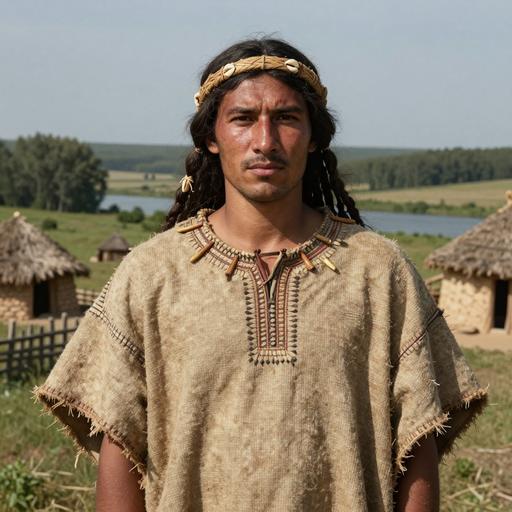
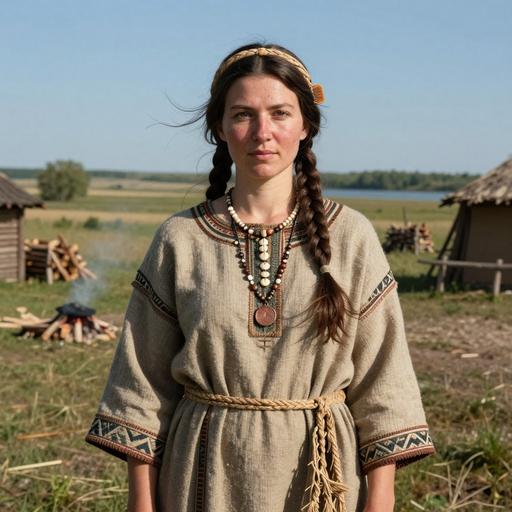
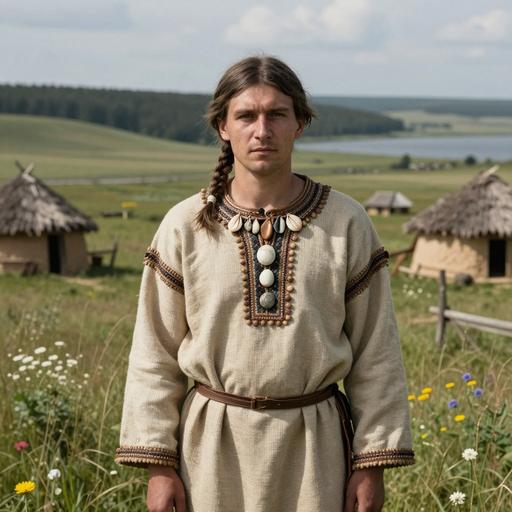
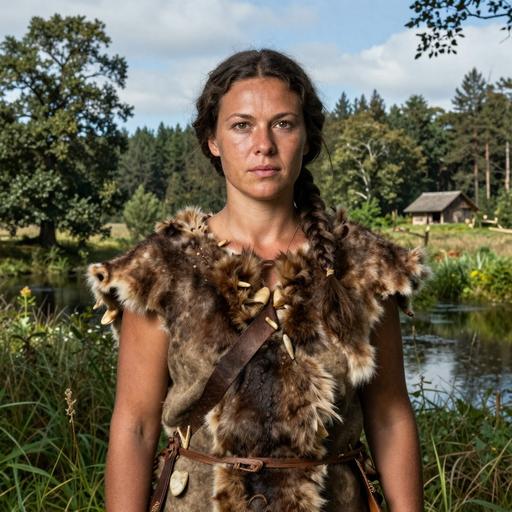
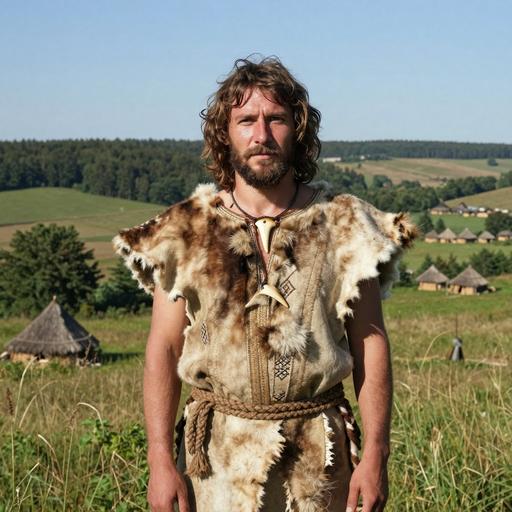
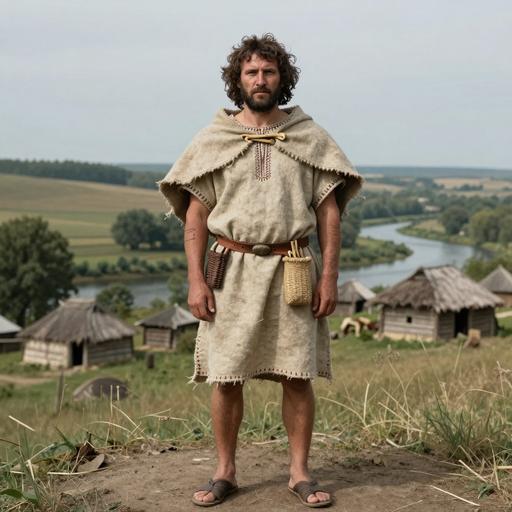
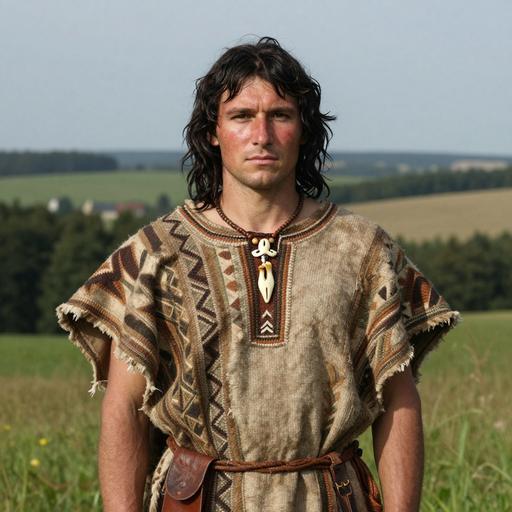
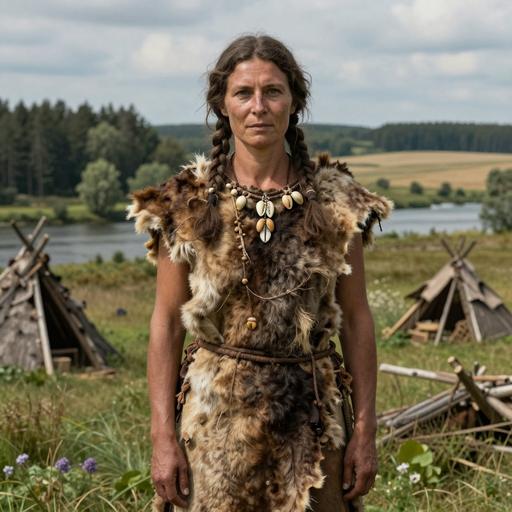
Haplogroup U4 and its subclades are commonly interpreted as markers of pre-Neolithic hunter-gatherer maternal ancestry in northern and eastern Europe. The presence of U4B1B in modern populations and occasional ancient samples suggests continuity of maternal lineages from Mesolithic hunter-gatherer groups into later periods, often surviving alongside incoming Neolithic farmer and Bronze Age pastoralist maternal pools.
While U4-related lineages were not typically drivers of continent-scale demographic expansions during the Neolithic or Bronze Age (those movements are often associated with other haplogroups), their persistence provides important evidence for local continuity and admixture dynamics in northern Eurasia. Where U4B1B occurs in Siberia or Central Asia, it is usually at low frequency and can reflect eastward contacts and gene flow between northern Eurasian hunter-gatherer-derived groups and indigenous Siberian populations.
Conclusion
U4B1B is a minor but informative maternal lineage nested within the U4B1 branch. Its distribution and age are consistent with an origin in the postglacial landscapes of northern/eastern Europe and subsequent patchy persistence through the Holocene, with occasional eastward occurrences. Because it is low frequency and undersampled in many regions, additional mitogenome sequencing of both modern and ancient individuals from the relevant areas may clarify its finer-scale phylogeny and demographic history.
Key Points
- Origins and Evolution
- Subclades (if applicable)
- Geographical Distribution
- Historical and Cultural Significance
- Conclusion