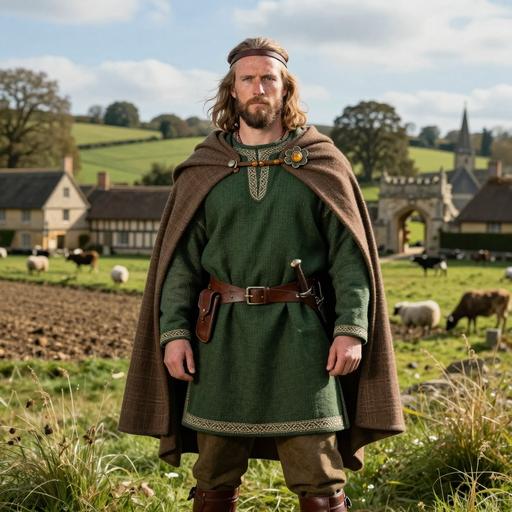
The Story
The journey of mtDNA haplogroup U4B1B1G
Origins and Evolution
U4B1B1G is a downstream branch of the U4B1B1 lineage, itself part of the broader mtDNA haplogroup U4 complex that is strongly associated with postglacial European hunter-gatherer populations. Based on the phylogenetic position of U4B1B1G beneath U4B1B1 and the estimated age of its parent clade, U4B1B1G most likely formed during the Early Holocene (roughly 9–8 kya) in Northern or Eastern Europe as human groups recolonized formerly glaciated landscapes after the Last Glacial Maximum.
Divergence of this subclade would have occurred through the accumulation of private mutations on a small maternal lineage within regional hunter-gatherer communities. The scarcity of U4B1B1G in modern samples and its limited presence in ancient DNA suggests it was never a major maternal lineage but rather a localized lineage that persisted at low frequency through population transitions.
Subclades (if applicable)
At present, U4B1B1G is a very low-frequency terminal or near-terminal subclade documented by a small number of defining mutations. There are no widely recognized deep downstream branches of U4B1B1G reported in the public literature or common phylogenies, which is consistent with its rarity; future sequencing of more ancient and modern mitogenomes may reveal further subdivision.
Geographical Distribution
The distribution of U4B1B1G is tightly centered on northern and northeastern Europe with low-level spillover into adjacent regions. Modern occurrences are most frequently identified in populations of Scandinavia and the Baltic region and in parts of northwest Russia, with rare findings in Siberian and Central Asian contexts. The lineage's presence in archaeological samples (two ancient individuals in the referenced database) confirms continuity from the Early Holocene into later prehistoric periods in northern Eurasia.
The low but detectable occurrence in Siberia and Central Asia likely reflects prehistoric gene flow along northern Eurasian corridors, or later movements that carried small numbers of northern European maternal lineages eastward. Very occasional findings in the Caucasus and South Asia likely represent low-frequency drift, historical movement, or sample contamination/incidental detection rather than major demographic events.
Historical and Cultural Significance
Because U4 and its subclades are commonly tied to Mesolithic and postglacial hunter-gatherer groups in Europe, U4B1B1G functions as a marker of that older substrate of maternal ancestry. Its persistence into the Neolithic and Bronze Age in some contexts indicates maternal continuity even as farming and later steppe-related migrations altered regional genetic landscapes. U4B1B1G is therefore useful for studies aiming to trace the survival and geographic shifts of hunter-gatherer maternal lineages through the transition to farming and later prehistoric migrations.
U4B1B1G is not associated with broad demographic expansions comparable to Neolithic farmer or Bronze Age steppe maternal lineages; instead it is indicative of localized continuity or limited gene flow. Its detection in ancient remains provides direct evidence for regional maternal continuity in northern Eurasia and contributes to finer-scale reconstructions of maternal population structure.
Conclusion
U4B1B1G is a low-frequency, geographically constrained mtDNA subclade whose phylogenetic placement and temporal depth tie it to postglacial hunter-gatherer populations of Northern/Eastern Europe. Although rare today and in ancient datasets, it preserves information about local maternal continuity and small-scale mobility across northern Eurasia and remains of interest in studies of Mesolithic-to-Bronze Age population dynamics.
Key Points
- Origins and Evolution
- Subclades (if applicable)
- Geographical Distribution
- Historical and Cultural Significance
- Conclusion