The Story
The journey of mtDNA haplogroup U5B1E
Origins and Evolution
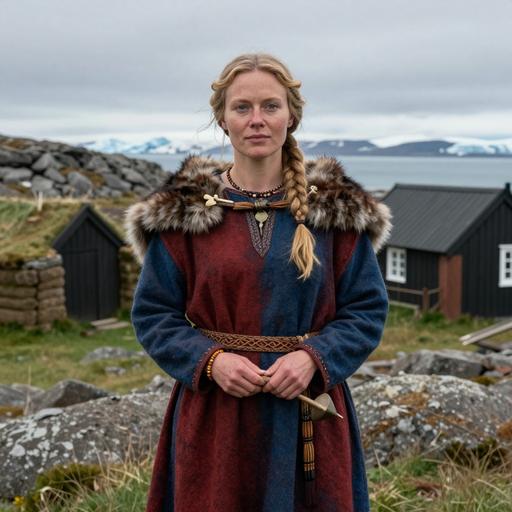
Haplogroup U5B1E sits as a downstream subclade of U5B1, itself a descendant of the ancient European haplogroup U5. U5 arose during the Upper Paleolithic and became prominent among postglacial Mesolithic hunter-gatherers in Europe; U5B1 has been associated with postglacial expansions northwards from southern European refugia. U5B1E represents a later, more geographically restricted branching within that broader U5B1 lineage. Based on its position in the tree and its rarity in both modern and ancient datasets, U5B1E most plausibly formed after the main postglacial expansions — likely in the later Neolithic/Bronze Age timeframe — and persisted at low frequency in northern and adjacent populations.
While the parent clade U5B1 has an estimated origin near ~9 kya and is tied to Mesolithic continuity in northern Europe, U5B1E appears to be a subsequent, localized split (estimated here ~3.5 kya). This estimate is an inference based on phylogenetic depth relative to U5B1 and the observed scarcity of U5B1E in published and database samples; precise dating would require well-sampled calibrated molecular-clock analyses including ancient mitogenomes.
Subclades (if applicable)
U5B1E is itself a terminal or near-terminal branch in current public phylogenies (few or no well-documented downstream subclades). Published and database evidence indicates it is uncommon and has limited internal diversification visible in available sequence datasets. As more complete mitogenomes are sequenced — particularly from under-sampled northern European and Arctic contexts — additional substructure could be discovered.
Geographical Distribution
U5B1E is geographically concentrated in Northern and parts of Western/Central Europe at low to moderate frequencies where sampled, with sporadic low-frequency occurrences reported further afield (Iberia, parts of North Africa and the Caucasus) consistent with historic gene flow and population movements. Modern occurrences are rare and patchy; the haplogroup has been identified in a very small number of ancient samples (two entries in the referenced database), indicating it has had some presence in archaeological contexts but is not a widespread founding lineage.
The distribution pattern is consistent with a maternal lineage that underwent local persistence or micro-regional expansion in northern Europe following broader U5 postglacial dynamics, rather than a wide continent-spanning expansion.
Historical and Cultural Significance
Because U5B1E is rare, its cultural associations are limited but informative when present. The broader U5B1 background connects to Mesolithic hunter-gatherers and later northern European populations (including the Saami), showing deep maternal continuity in high-latitude Europe. U5B1E's likely formation in the later prehistory / protohistoric period means it may appear among populations interacting with Neolithic farmers, Bronze Age mobility networks, and subsequent Iron Age and historic northern groups. Its sporadic presence in western and southern locales likely reflects low-level migration, trade, or founder effects rather than major demographic turnovers.
When detected in modern or ancient individuals, U5B1E can therefore provide a fine-scale signal of localized maternal ancestry with roots in long-term northern European lineages, complementing archaeological and autosomal evidence for regional continuity.
Conclusion
U5B1E is a low-frequency, regionally concentrated maternal lineage derived from the long-standing U5B1 tradition of northern European maternal ancestry. It exemplifies how deep Paleolithic and Mesolithic roots gave rise to multiple localized daughter lineages through the later Holocene. Given its rarity in current datasets, continued mitogenome sequencing of modern and ancient individuals — particularly from northern Europe and neighbouring regions — is needed to refine its age, internal structure, and precise historical role.
Key Points
- Origins and Evolution
- Subclades (if applicable)
- Geographical Distribution
- Historical and Cultural Significance
- Conclusion