The Story
The journey of mtDNA haplogroup U5B2A3
Origins and Evolution
mtDNA haplogroup U5B2A3 is a downstream branch of U5B2A, itself part of the broader and ancient European haplogroup U5. The U5 lineage is strongly associated with Late Glacial and Mesolithic hunter-gatherer populations of Europe. Given the placement of U5B2A at roughly ~11 kya, U5B2A3 plausibly arose after the initial postglacial expansions of U5B2A carriers, with a most likely time depth in the early to mid-Holocene (on the order of ~8 kya). As a subclade, U5B2A3 is defined by additional private mutations downstream of the U5B2A motif and represents a more recent diversification within the long-standing U5 maternal lineage.
Subclades (if applicable)
U5B2A3 is itself a terminal or low-diversity subclade in available datasets; no widely recognized named sub-subclades are consistently reported in public phylogenies as of current published surveys. The clade is best understood as a localized daughter lineage of U5B2A, and future larger ancient DNA and full mitogenome surveys may identify further branching. Like other U5 derivatives, it retains the deep-rooted U5 phylogenetic context while carrying private mutations that mark its more recent origin.
Geographical Distribution
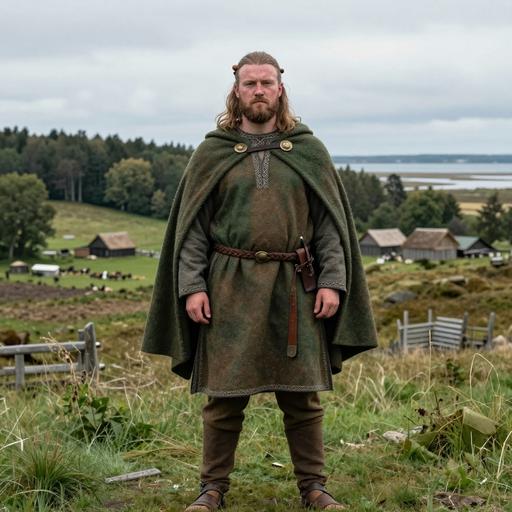
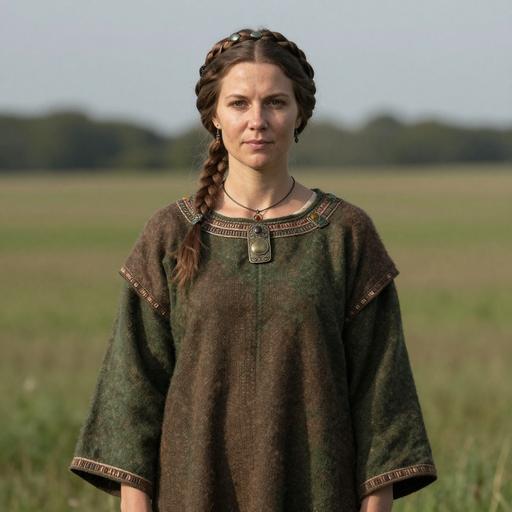
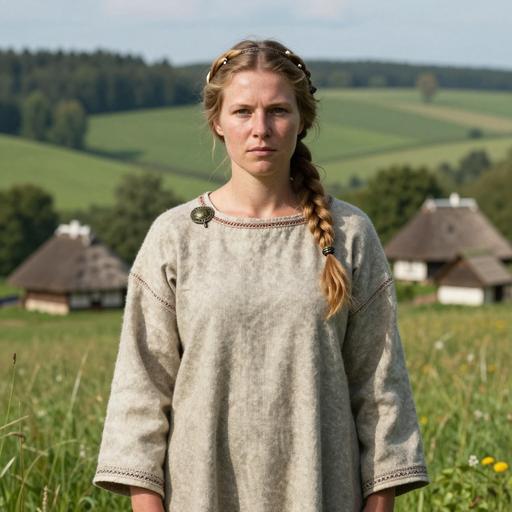
U5B2A3 is principally a Western/Northern European lineage in both modern and ancient datasets, occurring at low to modest frequency where sampled. Its strongest signals are in populations with long continuity from Mesolithic or early postglacial groups (for example in parts of Scandinavia, the Baltic region, and western Europe), and it also appears sporadically in central and eastern Europe. Low-frequency occurrences reported from regions on the southern margins of Europe (Anatolia/Caucasus) and North Africa likely reflect later gene flow or rare ancient connections rather than primary origin zones.
Historical and Cultural Significance
Haplogroup U5 and its subclades (including U5B2A and downstream branches like U5B2A3) are widely interpreted as markers of Mesolithic hunter-gatherer maternal ancestry in Europe. U5B2A3, given its postglacial origin and restricted distribution, likely represents continuity of local maternal lines through the Neolithic and Bronze Age transitions, often at low frequencies as incoming farming populations (with different maternal profiles) expanded. In archaeological contexts, U5-derived lineages are observed among Mesolithic skeletons and persist into later cultural horizons, where they sometimes co-occur with archaeological cultures associated with indigenous forager-descended groups or with mixed farmer-forager communities.
Conclusion
U5B2A3 exemplifies how deep Paleolithic and Mesolithic maternal lineages continued to diversify and survive into the Holocene within Europe. It is a relatively rare, regionally concentrated branch of the ancient U5 family, providing useful information about maternal continuity, local demographic events, and the complex interactions between indigenous hunter-gatherers and incoming agriculturalists. Increased sampling of complete mitogenomes from both modern and ancient individuals will refine its age estimate, internal structure, and precise archaeological associations.
Key Points
- Origins and Evolution
- Subclades (if applicable)
- Geographical Distribution
- Historical and Cultural Significance
- Conclusion