The Story
The journey of mtDNA haplogroup U5B2A5
Origins and Evolution
mtDNA haplogroup U5B2A5 is a downstream branch of U5B2A, itself nested within the broader European haplogroup U5—one of the oldest and most characteristic maternal lineages associated with Late Glacial and Mesolithic hunter-gatherers in Europe. Given its position under U5B2A (estimated around ~11 kya), U5B2A5 most likely arose in the early to mid-Holocene (we estimate ~6.0 kya) as local variation accumulated in post-glacial European populations. Its emergence reflects continued diversification of maternal lineages that had survived the Last Glacial Maximum and expanded across northern and western Europe during the Mesolithic and subsequent periods.
Subclades
U5B2A5 is a fine-scale, low-frequency terminal subclade; currently documented substructure under U5B2A5 is limited in published datasets and ancient DNA reports, consistent with the haplogroup's rarity. Because only a small number of sequences have been assigned to U5B2A5 in public and research databases (including three recorded ancient DNA hits in the database referenced), deep branching beneath U5B2A5 is not well-established and future ancient and modern mitogenome sequencing may reveal additional sublineages.
Geographical Distribution
U5B2A5 shows a predominantly northern and western European distribution with sporadic low-frequency occurrences beyond continental Europe. Modern and ancient sample records place the haplogroup in:
- Northern Europe (including Fennoscandia and Saami-associated contexts) where U5 sublineages are comparatively enriched.
- Western Europe and parts of Central Europe, where remnants of Mesolithic maternal lineages persist within later farming and mixed populations.
- Eastern Europe, the Caucasus/Anatolia, and North Africa at very low and sporadic frequencies—these occurrences likely reflect millennia of population movement, gene flow, and localized drift rather than a separate origin.
The presence of U5B2A5 in three ancient samples highlights its continuity from archaeological contexts into the present, albeit as a rare component of the mitochondrial pool.
Historical and Cultural Significance
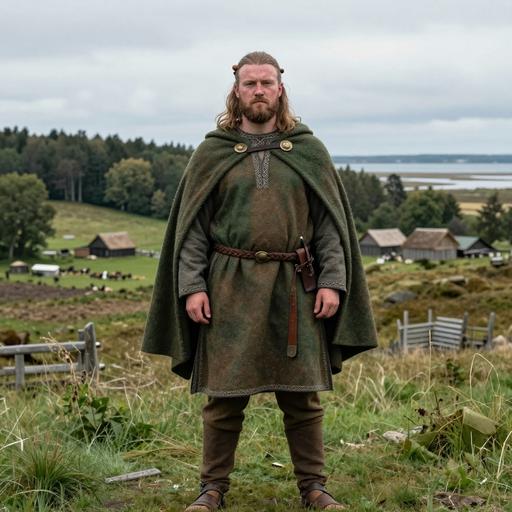
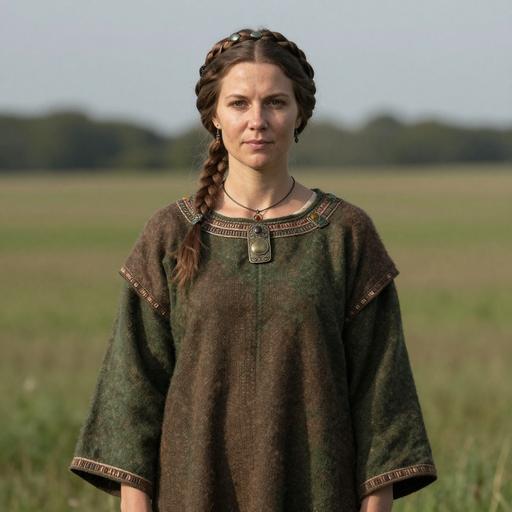
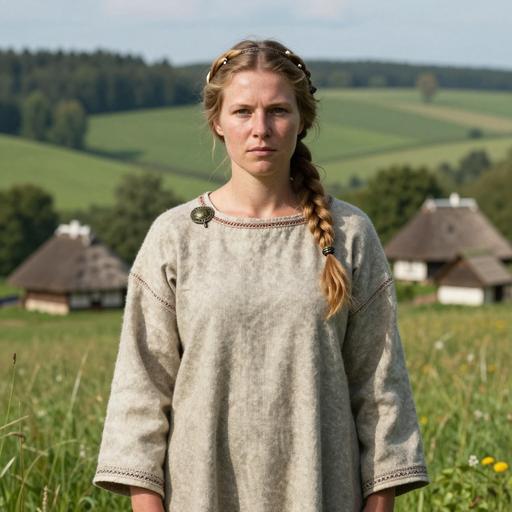
U5 lineages are strongly associated with Mesolithic hunter-gatherer ancestry across Europe; therefore U5B2A5 is best interpreted as part of that broader heritage. Over the Neolithic and Bronze Age, populations in Europe experienced major demographic changes (incoming Anatolian farmers, later Steppe pastoralists), but maternal U5 lineages frequently persisted at low to moderate levels due to admixture and local continuity. U5B2A5's survival into historic and modern times—particularly in northern cohorts such as Saami and some Western European groups—illustrates the persistence of maternal hunter-gatherer components through successive cultural transitions.
While U5B2A5 is not tied to a single well-defined archaeological culture in the way some haplogroups are, it can appear in contexts associated with Mesolithic foragers, and sporadically within later cultures (for example, individuals in Neolithic, Copper Age or Bronze Age burial assemblages), reflecting admixture between incoming agriculturalists and indigenous forager-descended maternal lineages.
Conclusion
U5B2A5 is a low-frequency but informative terminal mtDNA lineage nested within the ancient European U5 clade. Its geographic pattern and ancient occurrences support a scenario of early Holocene diversification among post-glacial hunter-gatherer populations in northern and western Europe, followed by long-term persistence at low levels through subsequent cultural transformations. Additional full mitogenome sequencing of both ancient and modern samples will be necessary to refine its age, internal topology, and finer-scale distribution.
Key Points
- Origins and Evolution
- Subclades
- Geographical Distribution
- Historical and Cultural Significance
- Conclusion