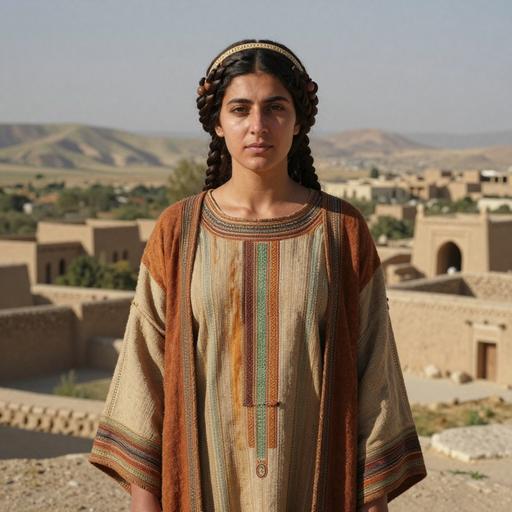
The Story
The journey of mtDNA haplogroup H13A2B
Origins and Evolution
H13A2B is a subclade nested beneath H13A2 within the broader mtDNA haplogroup H13. The parent lineage H13A2 is inferred to have arisen in the Near East/Caucasus region in the early to mid‑Holocene (the parent is commonly estimated near ~7.5 kya), and H13A2B represents a downstream split that probably formed somewhat later during the mid‑Holocene (here estimated around ~6 kya). As with many mtDNA subclades of H, H13A2B likely reflects local diversification of Near Eastern maternal lineages associated with Neolithic and subsequent demographic processes.
Phylogenetically, H13 sits within haplogroup H, which expanded in different directions after the Last Glacial Maximum. The H13A branch shows a concentration in the Caucasus and adjacent Near Eastern zones; H13A2B is one of the finer branches within that regional pattern and is most parsimoniously interpreted as a regional Near Eastern/Caucasian lineage that dispersed in small numbers into neighboring regions.
Subclades
H13A2B is a terminal (or near‑terminal) subclade in current phylogenies and is defined by mutations downstream of H13A2. At present, H13A2B contains a small number of named downstream variants in public and private databases; its internal diversity is limited compared with older H subclades, consistent with a relatively recent local origin and modest expansion. The scarcity of deeply branching internal substructure suggests a demographic history of localized persistence and occasional dispersal rather than a major continent‑wide expansion.
Geographical Distribution
Today H13A2B is found at its highest relative frequency in the Caucasus and adjacent Anatolian and Near Eastern populations, with lower and sporadic occurrences in the Balkans, southern Europe, and among some Jewish communities. Modern surveys and limited ancient DNA evidence indicate a pattern of regional concentration with peripheral low‑frequency presence across parts of Anatolia, the Levant, the southern Balkans and, to a lesser extent, in scattered European contexts.
Available ancient DNA is limited for this precise subclade, but the parent H13A2 has been observed in a small number of archaeological samples in Near Eastern/Anatolian contexts, supporting a Holocene presence in those regions. The pattern is consistent with H13A2B being part of the maternal background of Neolithic‑derived and later Near Eastern/Caucasus populations that contributed modestly to surrounding areas.
Historical and Cultural Significance
Because of its Near Eastern/Caucasus origin and mid‑Holocene time depth, H13A2B is best understood in relation to Neolithic demographic processes — principally the expansion and long‑term settlement of farming communities that originated in Anatolia and spread into adjacent regions. Its occurrences in Anatolia and the Caucasus make it a plausible component of the maternal gene pool of early agriculturalists in that region.
Later mobility (Bronze Age and historic period trade, migration, and population movements) likely redistributed small numbers of carriers into the Balkans, southern Europe and Jewish communities. The haplogroup does not display the broad, high‑frequency signature of large continental expansions (for example those associated with major Paleolithic re‑expansions or pan‑European Bronze Age movements) but rather a pattern of regional continuity and localized dispersal.
Conclusion
H13A2B is a geographically and temporally constrained maternal lineage derived from H13A2, reflecting postglacial and Neolithic diversification in the Near East/Caucasus. Its limited diversity and patchy distribution today indicate a history of local persistence with sporadic outward migration into neighboring parts of Anatolia, the Levant and southern Europe. Continued sampling of modern populations and ancient remains from the Caucasus, Anatolia and adjacent regions will clarify the fine‑scale history and internal structure of this subclade.
Key Points
- Origins and Evolution
- Subclades
- Geographical Distribution
- Historical and Cultural Significance
- Conclusion