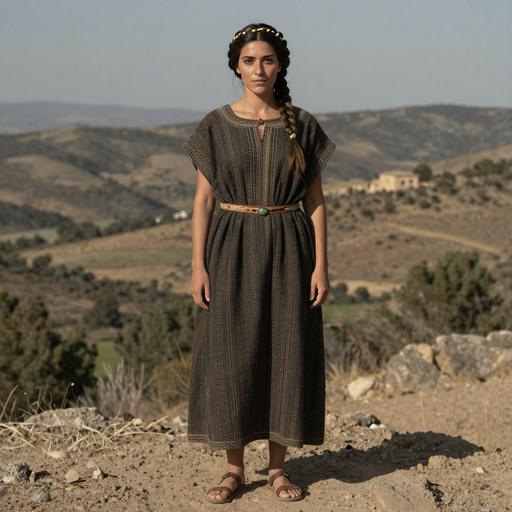
The Story
The journey of mtDNA haplogroup H1J
Origins and Evolution
mtDNA haplogroup H1J is a descendant branch of the common Western European clade H1. H1 itself diversified during and after the Last Glacial Maximum (~15 kya) and is closely tied to post‑glacial re‑expansion from southwestern European refugia. H1J appears to be a later, more derived lineage that likely arose in the Holocene (several thousand years after the parent H1 expansion). Because H1J is a subclade of a major Western European maternal haplogroup, its origin is best inferred to lie within the Iberian/Atlantic or adjacent western Mediterranean regions, followed by limited spreading during the Neolithic and Bronze Age periods.
Genetic dating for minor subclades is often imprecise due to limited sample sizes and mutation rate uncertainty; therefore the estimated origin time above (approximately 7 kya) should be treated as a reasonable, conservative estimate based on the phylogenetic depth relative to H1 and observed distributions in modern and ancient samples.
Subclades (if applicable)
H1J may itself contain downstream internal branching (sub‑lineages) detectable only with full mitogenome sequencing. In many published trees, smaller H1 subclades are named with lowercase suffixes (for example H1a, H1b, H1c, etc.); H1J behaves similarly in being a named branch defined by a specific set of coding‑region and control‑region mutations. Because sampling for rare subclades is often sparse, documented subclades of H1J are limited and further mitogenome sequence data from under‑sampled regions (Iberia, NW Africa, Mediterranean islands) will refine internal structure and timing.
Geographical Distribution
The observed modern distribution of H1J is concentrated in Western Europe with the highest occurrence in areas where H1 substructure is richest. Reported occurrences include the Iberian Peninsula (including Basque and Portuguese groups), parts of southwestern France, and Mediterranean islands. H1J also appears, at lower frequencies, in NW African populations (Maghreb/Berber groups) and sporadically in broader Western, Northern and Central Europe — consistent with maritime and overland contacts across the Atlantic façade and Mediterranean. The haplogroup is typically rare relative to its parent H1, so its detection in population surveys depends strongly on sample size and sequencing resolution.
Ancient DNA recovery of H1 subclades shows continuity of H‑lineages across the Mesolithic to Bronze Age in Western Europe; where H1J specifically has been identified in archaeological contexts, these finds tend to be Holocene in age and help anchor the lineage to regional demographic events.
Historical and Cultural Significance
Because H1J is a regional derivative of the widespread H1 lineage, its significance is primarily in refining local maternal histories rather than indicating continent‑wide migrations. Possible cultural and demographic associations include:
- Post‑glacial Mesolithic re‑expansion: H1 lineages as a whole were important in repopulation of Western Europe after the LGM; derived branches like H1J may have arisen during the Mesolithic or early Neolithic in local populations.
- Neolithic and Bronze Age dynamics: H1J could have been carried forward through the Neolithic farming transition and later Bronze Age population movements (including coastal and inland cultural interactions such as Cardial/Impressed Ware zones and later Bell Beaker connections), producing the sporadic but persistent presence in western and circum‑Mediterranean regions.
- Regional continuity: In regions such as Iberia and parts of southern France, H1 substructure including H1J can reflect long‑term maternal continuity punctuated by episodic influxes from neighbouring areas (e.g., North Africa, other parts of Europe).
It is important to emphasize that haplogroup presence alone does not equate to cultural identity; rather, H1J is a genetic marker that, when combined with archaeological and autosomal data, helps reconstruct maternal lineages and demographic connections.
Conclusion
H1J is best understood as a localized, derived branch of the widespread Western European maternal lineage H1. Its inferred origin in the Iberian/Atlantic sphere in the early to mid‑Holocene and its sporadic presence across western Mediterranean and adjacent regions make it useful for studies of regional maternal continuity and Holocene demographic processes. Improved geographic sampling and whole‑mitogenome sequencing will be required to resolve its fine‑scale phylogeny, age and precise prehistoric movements with greater confidence.
Key Points
- Origins and Evolution
- Subclades (if applicable)
- Geographical Distribution
- Historical and Cultural Significance
- Conclusion