The Story
The journey of mtDNA haplogroup D1F
Origins and Evolution
mtDNA haplogroup D1F is a downstream branch of the Native American clade D1, itself derived from East Eurasian haplogroup D that diversified during the Late Pleistocene in Beringia and northeastern Asia. Based on the position of D1F within the D1 phylogeny and patterns of regional diversity, D1F most likely formed after the initial peopling of the Americas during the Early Holocene (roughly ~9 kya). This timing and geographic inference reflect a post-entry diversification event in the Americas, where founder lineages such as D1 radiated into multiple localized subclades as populations adapted to and expanded within diverse ecological zones.
While D1 preserves the broader signal of a Beringian origin for many Native American maternal lineages, D1F represents a more regionally restricted lineage that accumulated private mutations after the continental dispersal, indicating localized population continuity and demographic processes (bottlenecks, founder effects, and local expansions) within its area of concentration.
Subclades
As a named subclade of D1, D1F may contain further lower-level branches identifiable by diagnostic mutations in the mitochondrial genome. The resolution and naming of internal subclades depend on sampling density and full mitochondrial sequencing; limited sampling in some parts of the Americas means additional substructure of D1F could be revealed with broader ancient and modern mtDNA datasets. Currently, D1F is treated as a discrete branch within D1 characterized by a specific set of coding- and control-region mutations that distinguish it from sibling D1 lineages.
Geographical Distribution
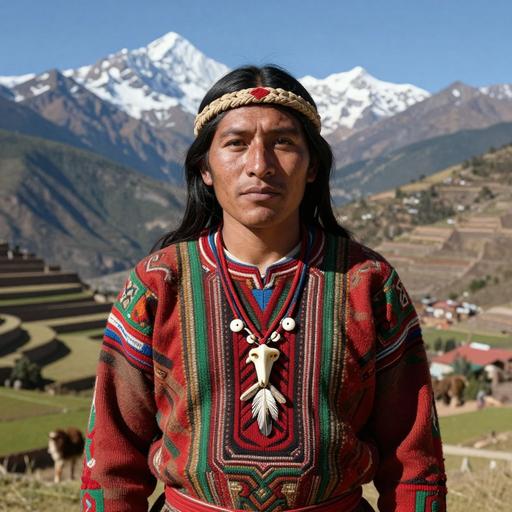
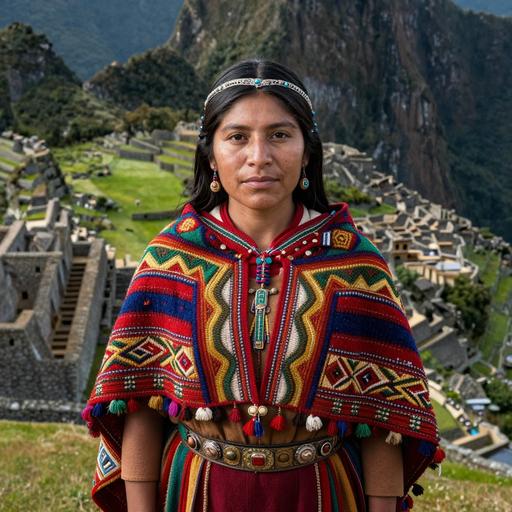
D1F is most commonly observed in northern South America, particularly among Indigenous populations in the Andean foothills and adjacent Amazonian interfluvial regions. It is found at lower frequencies further north into Central America and parts of North America, consistent with secondary dispersal or ancient shared ancestry. Sporadic occurrences or closely related sequences have also been reported in ancient samples from the circum-Beringian region, reflecting the deep history of D1-derived lineages and the complexity of early American population movements.
The geographic pattern — concentration in a South American core with peripheral low-frequency occurrences — supports a scenario in which D1F arose locally in the Americas and remained regionally structured rather than being a widely distributed pan-American lineage.
Historical and Cultural Significance
Although mtDNA lineages do not map one-to-one onto archaeological cultures, D1F can be informative about maternal ancestry and demographic history in regions where it is present. Its inferred Early Holocene origin places its formation during a period of postglacial environmental change and human adaptation in the Americas when forager groups were dispersing, regionalizing, and developing local subsistence strategies. In areas such as the northern Andes and adjacent Amazon, continuity of D1F into the late Holocene among modern Indigenous groups may reflect long-term maternal line continuity through Archaic and Formative cultural phases.
The presence of D1F in both modern Indigenous communities and in limited ancient DNA contexts can help link genetic continuity to archaeological sequences (for example, Archaic and early regional formative assemblages), but interpretation should be cautious: mtDNA represents only a single maternal locus and must be integrated with autosomal, Y-chromosome, archaeological, and linguistic evidence.
Conclusion
mtDNA haplogroup D1F is a geographically structured subclade of D1 likely formed in the Americas during the Early Holocene and principally associated with Indigenous populations of northern South America. It exemplifies how founder Native American maternal lineages diversified regionally after initial colonization, and highlights the value of targeted mitochondrial sequencing and ancient DNA for resolving local population histories. Further sampling, especially high-coverage ancient mitogenomes, will clarify D1F's internal structure, precise age, and full prehistoric distribution.
Key Points
- Origins and Evolution
- Subclades
- Geographical Distribution
- Historical and Cultural Significance
- Conclusion