Menu
mtDNA Haplogroup • Maternal Lineage

D1T

mtDNA Haplogroup D1T

~15,000 years ago
Beringia / Northeast Asia
0 subclades
14 ancient samples
Scroll to explore
Chapter I

The Story

The journey of mtDNA haplogroup D1T

Origins and Evolution

mtDNA haplogroup D1T sits as a downstream lineage of haplogroup D1, itself a well-established Native American maternal founder derived from East Eurasian haplogroup D. Given the parent haplogroup's age and proposed origin in Beringia / northeastern Asia (~18 kya), D1T most likely arose during the terminal Pleistocene or early Holocene (estimated here ~15 kya) as maternal lineages diversified after entry into the Americas. Its phylogenetic position implies a split from other D1 subclades early in the continental radiation of Native American mitochondrial diversity.

The formation of D1T is best understood in the context of a small founding population that experienced rapid geographic expansion, serial founder effects, and subsequent regional drift, producing deeply structured local subclades across North, Central, and South America.

Subclades

As a named subclade of D1, D1T may itself contain further downstream branches identifiable by unique control-region and coding-region mutations in the mitochondrial genome. Published population datasets and ancient DNA surveys sometimes resolve finer-scale substructure within D1-derived lineages; the extent of internal diversity in D1T will depend on sampling depth, particularly among South American and Andean populations where this lineage appears most prominent. Continued targeted sequencing of modern and ancient mitogenomes is needed to robustly delineate D1T subclades and infer internal coalescence times.

Geographical Distribution

D1T shows a distribution that mirrors many Native American-specific lineages but with a tendency toward higher frequency and deeper persistence in South America. Modern and ancient DNA evidence suggests occurrences in:

  • Indigenous populations of South America (Andean highlands and lowland Amazonian groups) where regional differentiation is pronounced.
  • Indigenous groups in Central America and Mexico at lower frequencies, consistent with southward expansion routes.
  • Various First Nations and Native American tribes in North America in scattered occurrences, often reflecting local founder events or historical gene flow.
  • Arctic and subarctic populations (Inuit, Yupik) only sporadically, usually regionally restricted.
  • Low-frequency occurrences or ancient occurrences in northeastern Asian and Siberian samples, representing either ancestral diversity retained in Beringia or backflow/continuity signals in the North Pacific rim.

The presence of D1T in archaeological samples reinforces its antiquity within the Americas and its role in early post-glacial population structure.

Historical and Cultural Significance

Because D1T is nested within the primary Native American maternal pool, it contributes to reconstructing the timing and pathways of the peopling of the Americas. Its observed concentrations in South America—especially in Andean and some Amazonian contexts—suggest that D1T-bearing maternal lineages were part of early southward expansions that established long-term local population structure. In regions where D1T is common, it can provide insights into prehistoric demography, migration corridors (coastal vs. inland routes), and the degree of isolation versus interaction among regional groups during the Holocene.

D1T's detection in ancient remains from archaeological contexts helps calibrate population continuity and change, for example indicating lineages that persisted across millennia in particular ecological zones (highlands, lowlands, coastal areas).

Conclusion

mtDNA D1T is a regionally important derivative of D1 that exemplifies the deep maternal structure formed after the initial colonization of the Americas. While the precise internal branching and modern frequency vary by region and remain to be fully resolved, current evidence places D1T as an early American lineage with strongest representation in South America and meaningful contributions to our understanding of early Native American population history. Ongoing high-resolution mitogenome sequencing of both modern and ancient samples will clarify the detailed phylogeny and demographic history of D1T.

Key Points

  • Origins and Evolution
  • Subclades
  • Geographical Distribution
  • Historical and Cultural Significance
  • Conclusion
Chapter II

Tree & Relationships

Phylogenetic context and subclades

Evolution Path

This haplogroup's evolutionary journey from its earliest ancestor to the present.

Steps Haplogroup Age Estimate Archaeology Era Time Passed Immediate Descendants Tested Modern Descendants Ancient Connections
1 D1T Current ~15,000 years ago 🏹 Mesolithic 15,000 years 0 0 14
2 D1 ~18,000 years ago 🏹 Mesolithic 18,000 years 7 52 13
3 D ~45,000 years ago 🦴 Paleolithic 45,000 years 7 398 137
4 M ~60,000 years ago 🦴 Paleolithic 60,000 years 11 1,200 41
5 L3 ~70,000 years ago 🦴 Paleolithic 70,000 years 11 17,621 6
6 L ~160,000 years ago 🦴 Paleolithic 160,000 years 7 18,987 5

Subclades (0)

Terminal branch - no known subclades

Siblings (6)

Other branches from the same parent haplogroup

Chapter III

Where in the World

Geographic distribution and modern presence

Place of Origin

Beringia / Northeast Asia

Modern Distribution

The populations where MTDNA haplogroup D1T is found include:

  1. Indigenous peoples of South America (Andean groups, Amazonian tribes)
  2. Indigenous peoples of North America (various First Nations and Native American tribes)
  3. Indigenous peoples of Central America and Mexico
  4. Arctic and subarctic Indigenous groups (Inuit and some Yupik populations — variable, regionally)
  5. Some Indigenous Siberian and Northeast Asian groups at low frequency or in ancient samples (e.g., Koryak, Chukchi, other Beringian groups)
  6. Paleo-Indian and ancient Beringian archaeological samples recovered in ancient DNA studies
CHAPTER IV

When in Time

Your haplogroup in the context of human history

~20k years ago

Last Glacial Maximum

Peak of the last ice age, populations isolated

~15k years ago

Haplogroup D1T

Your mtDNA haplogroup emerged in Beringia / Northeast Asia

Beringia / Northeast Asia
~10k years ago

Neolithic Revolution

Agriculture begins, settled communities form

~5k years ago

Bronze Age

Metalworking, writing, and early civilizations

~3k years ago

Iron Age

Iron tools, expanded trade networks

~2k years ago

Classical Antiquity

Greek and Roman civilizations flourish

Present

Present Day

Modern era

Your Haplogroup
Historical Era
Chapter IV-B

Linked Cultures

Ancient cultures associated with mtDNA haplogroup D1T

Cultural Heritage

These ancient cultures have been linked to haplogroup D1T based on matching ancient DNA samples from archaeological excavations. The presence of this haplogroup in these cultures provides insights into the migrations and population movements of populations carrying this haplogroup.

Chumash Spirit Cave
Culture assignments are based on archaeological context of ancient DNA samples and may represent regional associations during specific time periods.
Chapter V

Sample Catalog

Top 14 ancient DNA samples directly related to haplogroup D1T or parent clades

14 / 14 samples
Portrait Sample Country Era Date Culture mtDNA Match
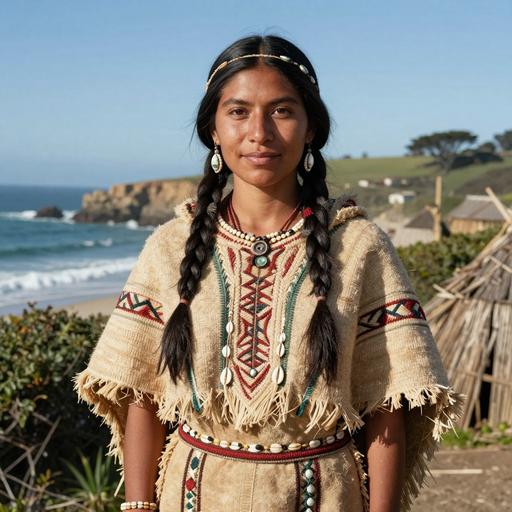
Portrait of ancient individual PS-18 from USA, dated 100 CE - 700 CE
PS-18
USA Chumash Culture, California, USA 100 CE - 700 CE Chumash D1t Direct
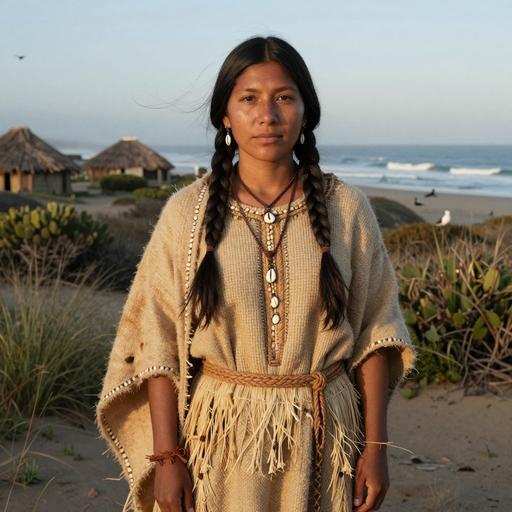
Portrait of ancient individual PS-26 from USA, dated 100 CE - 700 CE
PS-26
USA Chumash Culture, California, USA 100 CE - 700 CE Chumash D1t Direct
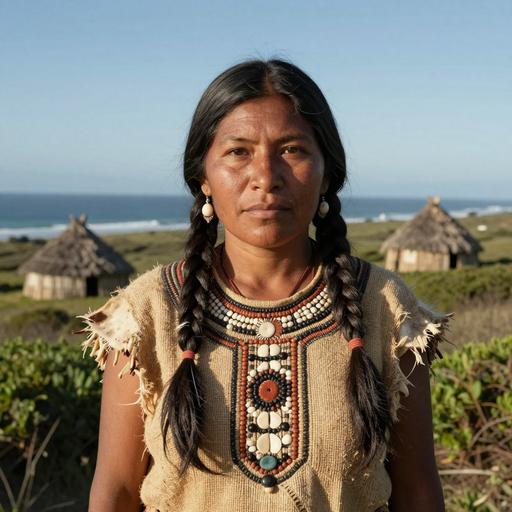
Portrait of ancient individual PS-17 from USA, dated 100 CE - 700 CE
PS-17
USA Chumash Culture, California, USA 100 CE - 700 CE Chumash D1t Direct
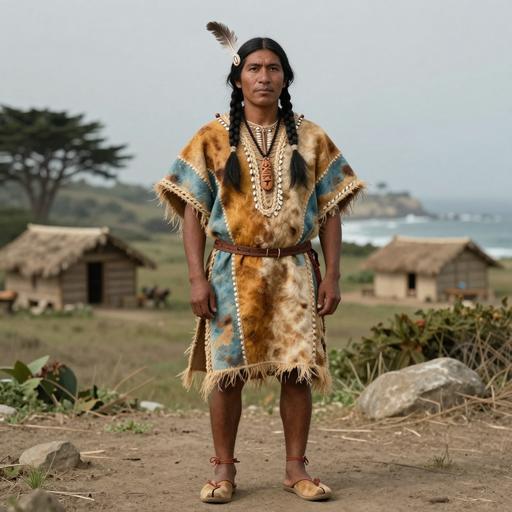
Portrait of ancient individual PS-02 from USA, dated 100 CE - 700 CE
PS-02
USA Chumash Culture, California, USA 100 CE - 700 CE Chumash D1t Direct
Portrait of ancient individual PS-23 from USA, dated 100 CE - 700 CE
PS-23
USA Chumash Culture, California, USA 100 CE - 700 CE Chumash D1t Direct
Portrait of ancient individual PS-04 from USA, dated 100 CE - 700 CE
PS-04
USA Chumash Culture, California, USA 100 CE - 700 CE Chumash D1t Direct
Portrait of ancient individual PS-02 from USA, dated 100 CE - 700 CE
PS-02
USA The First Peoples of North America 100 CE - 700 CE D1t Direct
Portrait of ancient individual PS-04 from USA, dated 100 CE - 700 CE
PS-04
USA The First Peoples of North America 100 CE - 700 CE D1t Direct
Portrait of ancient individual PS-17 from USA, dated 100 CE - 700 CE
PS-17
USA The First Peoples of North America 100 CE - 700 CE D1t Direct
Portrait of ancient individual PS-18 from USA, dated 100 CE - 700 CE
PS-18
USA The First Peoples of North America 100 CE - 700 CE D1t Direct
Chapter VI

Carrier Distribution Map

Geographic distribution of 14 ancient DNA samples carrying haplogroup D1T

Time Period Filter
All Time Periods
Showing all samples
Each marker represents an ancient individual
Chapter VII

Temporal Distribution

Distribution of carriers across archaeological periods

Chapter VIII

Geographic Distribution

Distribution of carriers by country of origin

Chapter IX

Country × Era Distribution

Cross-tabulation of carrier countries and archaeological periods

Data

Data & Provenance

Source information and data quality

Last Updated 2026-02-16
Confidence Score 50/100
Coverage Low
Data Source

We use the latest phylotree for MTDNA haplogroup classification and data.