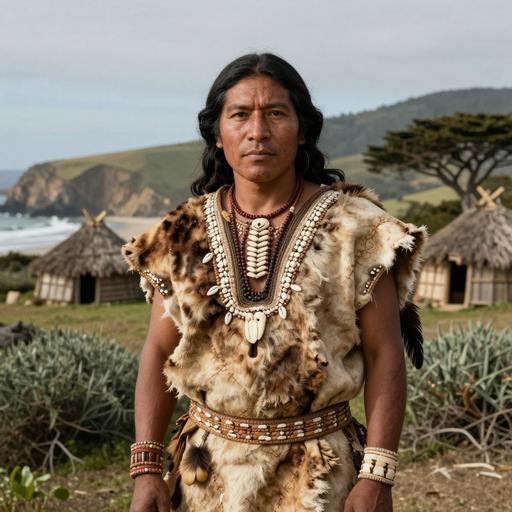
The Story
The journey of mtDNA haplogroup D1S
Origins and Evolution
mtDNA haplogroup D1S is a descendant lineage of the Native American clade D1, which itself derives from East Eurasian haplogroup D. The parent clade D1 is widely interpreted to have formed in Beringia or northeastern Asia during the Late Pleistocene (around 18 kya) and to have diversified as populations moved into the Americas. D1S most likely arose after the initial differentiation of D1, plausibly during the terminal Pleistocene or Early Holocene (roughly 14 kya in our estimate), either within a Beringian/Alaskan population prior to widespread southward dispersal or in an early North American population soon after entry into the continent.
Phylogenetically, D1S sits within the D1 subtree and is expected to share the diagnostic mutations of D1 plus one or more additional derived variants that define the S subclade. Because D1 is deeply structured across the Americas, D1S represents one of several geographically localized offshoots that reflect founder effects, drift, and subsequent regional expansions.
Subclades (if applicable)
As a named subclade of D1, D1S may itself contain internal variation and additional downstream sublineages detectable with full mitochondrial genome sequencing. Published population surveys and ancient DNA studies often reveal fine-scale structure within D1 subclades; therefore, D1S could split into further subclades with larger sample sizes and denser sequencing. At present, evidence supports D1S as a distinct lineage characterized by a small number of defining mutations relative to the D1 root, with limited but measurable regional substructure in the Americas.
Geographical Distribution
D1S exhibits a distribution concentrated in the Americas with the highest representation in parts of South America and lower, more sporadic presence in Central and North America and the Arctic. The pattern is consistent with the overall behavior of D1 lineages: deep regional structure, localized high frequency of particular subclades, and low-frequency occurrences in neighboring regions due to past migrations and gene flow. A small number of ancient northeastern Asian and Beringian samples occasionally carry D1 or D1-derived lineages, supporting a Beringian/Near-Northeast Asian origin of the parent clade and early contacts across the Bering Strait.
Empirical evidence: D1S has been identified in modern Indigenous populations (especially among Andean and Amazonian groups) and appears in at least two archaeological/ancient DNA samples in available databases, indicating an identifiable presence in prehistoric contexts.
Historical and Cultural Significance
Because mtDNA traces direct maternal ancestry, the distribution of D1S provides insight into female-mediated demographic processes during the peopling of the Americas. High regional specificity of D1 subclades (including D1S) is consistent with small founding groups, strong drift in isolated populations, and localized expansions after initial colonization. In South America, the retention or local amplification of D1S in certain Andean or Amazonian groups may reflect early settlement patterns and subsequent cultural continuity.
Archaeogenetic associations between D1-derived matrilines and early American archaeological assemblages (Paleo-Indian and Early Holocene contexts) strengthen the interpretation that D1 subclades were part of the founding maternal gene pool of the Americas. However, cultural attributions should be cautious: mtDNA lineages do not map one-to-one onto archaeological cultures and are best interpreted alongside autosomal, Y-DNA, linguistic, and archaeological evidence.
Conclusion
D1S is a regionally informative subclade of the native American mtDNA lineage D1. It likely arose near the time of early American population differentiation and now survives as a geographically structured maternal lineage, most often detected in parts of South America with lower frequency across Central and North America and occasional presence in Arctic and northeastern Asian ancient contexts. Continued sampling, complete mitochondrial genome sequencing, and integration with ancient DNA studies will refine the phylogenetic placement, age estimates, and geographic history of D1S.
Key Points
- Origins and Evolution
- Subclades (if applicable)
- Geographical Distribution
- Historical and Cultural Significance
- Conclusion