The Story
The journey of mtDNA haplogroup D1I
Origins and Evolution
mtDNA haplogroup D1I is a downstream branch of the Native American clade D1, itself derived from East Eurasian haplogroup D associated with the Beringian/NE Asian source populations that contributed to the peopling of the Americas. Based on the phylogenetic position of D1I within D1 and the regional distribution of reported modern and ancient occurrences, D1I most likely arose in the early Holocene (post-glacial) period, after the initial coastal and interior dispersals from Beringia but while founder effects and local differentiation were still strong. An estimated age in the order of ~13 kya is consistent with formation during the Early Holocene as populations spread into and diversified within South America.
Subclades
As an intermediate subclade within D1, D1I may comprise one or more internal branches defined by additional diagnostic mutations observed in high-resolution sequencing studies. Compared with better-characterized sibling D1 subclades, D1I appears to be regionally restricted rather than pan-American. Ongoing mitochondrial genome sequencing of modern and ancient samples refines its internal structure; therefore, some named downstream sublineages may be identified as more data accumulate.
Geographical Distribution
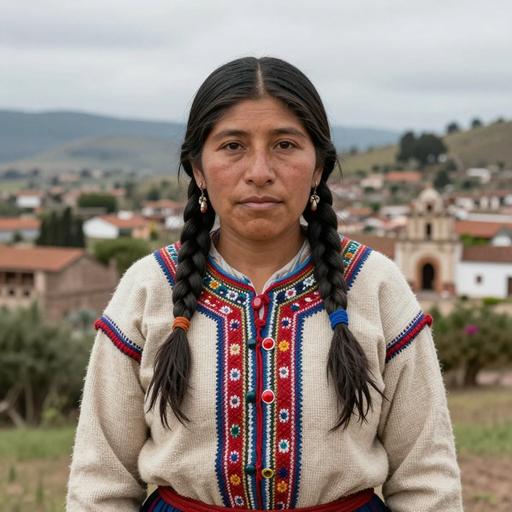
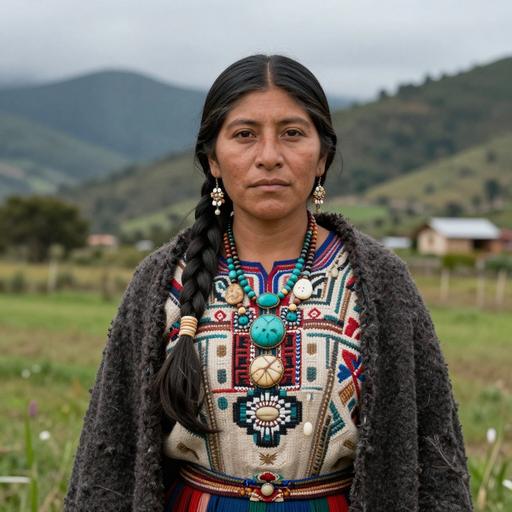
D1I shows a predominantly South American distribution with highest relative frequencies in Andean and adjacent Amazonian populations. It is generally detected at low to moderate frequency in modern indigenous samples and occasionally in ancient DNA from early Holocene contexts in South America, consistent with a local origin and long-term regional continuity. Occasional singletons or very low-frequency occurrences in Central or North American collections or in ancient Siberian/NE Asian samples can reflect ancient population structure, later movements, or modern/sample contamination, but the strongest geographic signal is within South America.
Historical and Cultural Significance
Because D1I likely originated during the early phases of postglacial settlement of South America, its presence marks maternal lineages that contributed to regional population formation, local founder effects, and long-term continuity through the Holocene. In archaeological contexts, D1I-bearing individuals would be expected among early Holocene hunter-gatherer groups, preceramic coastal and highland communities, and subsequent cultural complexes that developed in the Andes and adjacent lowland regions. While haplogroups do not map directly to archaeological cultures, patterns of D1I diversity and age can inform models of demographic expansion, isolation-by-distance, and microregional population structure in prehistoric South America.
Conclusion
mtDNA haplogroup D1I is best interpreted as a regional offshoot of the founding Native American D1 lineage that formed in South America during the early Holocene and today provides a useful marker for studying maternal continuity, local founder events, and the fine-scale population history of Andean and Amazonian indigenous groups. Continued whole-mitogenome sequencing of both modern and ancient samples will refine its phylogeny, age estimates, and geographic boundaries.
Key Points
- Origins and Evolution
- Subclades
- Geographical Distribution
- Historical and Cultural Significance
- Conclusion