Menu
mtDNA Haplogroup • Maternal Lineage

D1M

mtDNA Haplogroup D1M

~15,000 years ago
South America (Andean/Amazonian)
0 subclades
2 ancient samples
Scroll to explore
Chapter I

The Story

The journey of mtDNA haplogroup D1M

Origins and Evolution

mtDNA haplogroup D1M is a downstream branch of the Native American maternal lineage D1, itself derived from East Eurasian haplogroup D. The parent clade D1 is widely accepted to have formed in Beringia or northeastern Asia during the Late Pleistocene and to have entered the Americas with the first founding populations. D1M likely diversified within the Americas after initial colonization, with a time-to-most-recent-common-ancestor consistent with the early to mid-Holocene or late Pleistocene dispersals (roughly ~15 kya, recognizing uncertainty in precise coalescence estimates). Its emergence is best interpreted as part of the regional differentiation of maternal lineages as populations moved southward and adapted to distinct ecologies in South America.

Subclades

As a named subclade of D1, D1M may include downstream branches identified in population and ancient DNA surveys; however, it is currently a relatively minor and regionally restricted lineage compared with major D1 subdivisions. Where finer-resolution sequencing (complete mitogenomes) has been performed, D1M carries diagnostic mutations that distinguish it from other D1 subclades and allow assignment to particular South American populations. Continued sequencing of modern and ancient mitogenomes is likely to reveal additional internal structure within D1M.

Geographical Distribution

D1M shows a geographically concentrated distribution, with its highest frequencies and diversity in parts of South America, particularly among Andean and some Amazonian indigenous groups. It is also observed at lower and more variable frequencies in Central America and Mexico and among some First Nations and Native American groups in North America. In the Arctic and subarctic, D1M is generally rare but may be detected occasionally in modern or ancient Inuit/Yupik-associated contexts depending on local histories of contact and gene flow. Low-frequency occurrences or single ancient sample hits have also been reported in some northeastern Asian and Siberian groups, reflecting the deep Beringian connections between Northeast Asia and early Native American founders.

Historical and Cultural Significance

While D1M is not one of the highest-frequency pan-American founder lineages, its regional concentration in South America makes it informative for reconstructing post-entry population structure, migration routes within the continent, and local demographic events (bottlenecks, founder effects, and expansions). The presence of D1M in early archaeological samples (including at least two ancient DNA samples in some curated databases) supports its antiquity in the Americas and its value for tracing prehistoric population continuity, especially in Andean and Amazonian contexts. In genetic studies, D1M complements other maternal markers (A2, B2, C1, D4h3a) used to model the timing and structure of pre-Columbian populations and can help distinguish localized maternal lineages from broader continental founder lineages.

Conclusion

D1M is a regionally informative subclade of the Native American D1 maternal lineage that likely diversified in the Americas after the initial Late Pleistocene entry. Its modern and ancient occurrences—concentrated in South America but present elsewhere in varying degrees—make it a useful marker for studies of South American population history and intra-continental dispersals. Continued mitogenome sequencing, especially of under-sampled groups and archaeological remains, will refine its substructure, age estimates, and precise geographic origins.

Key Points

  • Origins and Evolution
  • Subclades
  • Geographical Distribution
  • Historical and Cultural Significance
  • Conclusion
Chapter II

Tree & Relationships

Phylogenetic context and subclades

Evolution Path

This haplogroup's evolutionary journey from its earliest ancestor to the present.

Steps Haplogroup Age Estimate Archaeology Era Time Passed Immediate Descendants Tested Modern Descendants Ancient Connections
1 D1M Current ~15,000 years ago 🏹 Mesolithic 15,000 years 0 2 2
2 D1 ~18,000 years ago 🏹 Mesolithic 18,000 years 7 52 13
3 D ~45,000 years ago 🦴 Paleolithic 45,000 years 7 398 137
4 M ~60,000 years ago 🦴 Paleolithic 60,000 years 11 1,200 41
5 L3 ~70,000 years ago 🦴 Paleolithic 70,000 years 11 17,621 6
6 L ~160,000 years ago 🦴 Paleolithic 160,000 years 7 18,987 5

Subclades (0)

Terminal branch - no known subclades

Siblings (6)

Other branches from the same parent haplogroup

Chapter III

Where in the World

Geographic distribution and modern presence

Place of Origin

South America (Andean/Amazonian)

Modern Distribution

The populations where MTDNA haplogroup D1M is found include:

  1. Indigenous peoples of South America (Andean groups, Amazonian tribes)
  2. Indigenous peoples of North America (various First Nations and Native American tribes)
  3. Indigenous peoples of Central America and Mexico
  4. Arctic and subarctic Indigenous groups (Inuit and some Yupik populations — variable, regionally)
  5. Some Indigenous Siberian and Northeast Asian groups at low frequency or in ancient samples (e.g., Koryak, Chukchi, other Beringian groups)
  6. Paleo-Indian and ancient Beringian archaeological samples recovered in ancient DNA studies
CHAPTER IV

When in Time

Your haplogroup in the context of human history

~20k years ago

Last Glacial Maximum

Peak of the last ice age, populations isolated

~15k years ago

Haplogroup D1M

Your mtDNA haplogroup emerged in South America (Andean/Amazonian)

South America (Andean/Amazonian)
~10k years ago

Neolithic Revolution

Agriculture begins, settled communities form

~5k years ago

Bronze Age

Metalworking, writing, and early civilizations

~3k years ago

Iron Age

Iron tools, expanded trade networks

~2k years ago

Classical Antiquity

Greek and Roman civilizations flourish

Present

Present Day

Modern era

Your Haplogroup
Historical Era
Chapter IV-B

Linked Cultures

Ancient cultures associated with mtDNA haplogroup D1M

Cultural Heritage

These ancient cultures have been linked to haplogroup D1M based on matching ancient DNA samples from archaeological excavations. The presence of this haplogroup in these cultures provides insights into the migrations and population movements of populations carrying this haplogroup.

Arroyo Seco Loma San Gabriel Purépecha Saki Tzul Spirit Cave Sumidouro
Culture assignments are based on archaeological context of ancient DNA samples and may represent regional associations during specific time periods.
Chapter V

Sample Catalog

Top 2 ancient DNA samples directly related to haplogroup D1M or parent clades

2 / 2 samples
Portrait Sample Country Era Date Culture mtDNA Match
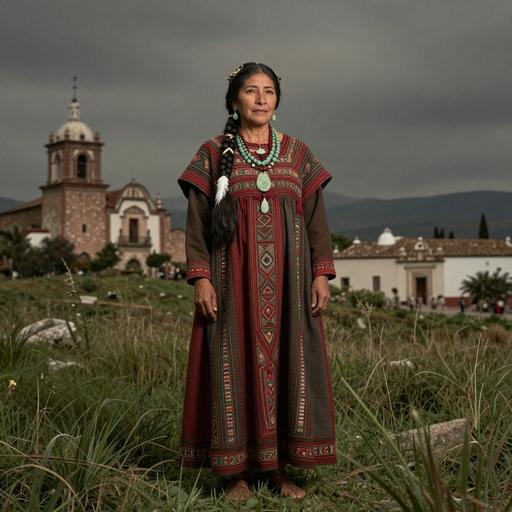
Portrait of ancient individual E19CdV from Mexico, dated 660 CE - 780 CE
E19CdV
Mexico Mexico Guanajuato Medieval 660 CE - 780 CE Loma San Gabriel D1m Direct
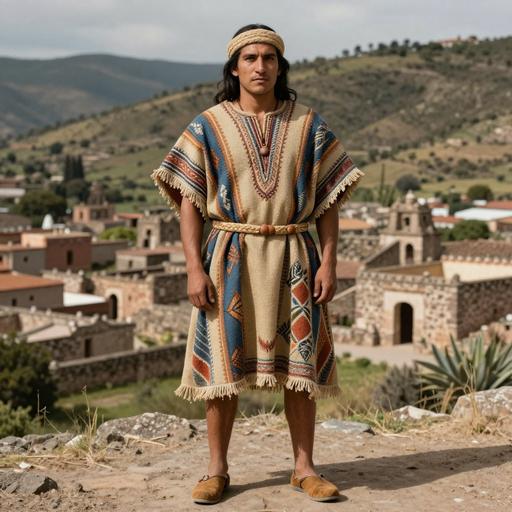
Portrait of ancient individual 11R_merged from Mexico, dated 729 CE - 809 CE
11R_merged
Mexico Mexico Queretaro Medieval 729 CE - 809 CE Purépecha D1m Direct
Chapter VI

Carrier Distribution Map

Geographic distribution of 2 ancient DNA samples carrying haplogroup D1M

Time Period Filter
All Time Periods
Showing all samples
Each marker represents an ancient individual
Chapter VII

Temporal Distribution

Distribution of carriers across archaeological periods

Chapter VIII

Geographic Distribution

Distribution of carriers by country of origin

Chapter IX

Country × Era Distribution

Cross-tabulation of carrier countries and archaeological periods

Data

Data & Provenance

Source information and data quality

Last Updated 2026-02-16
Confidence Score 50/100
Coverage Low
Data Source

We use the latest phylotree for MTDNA haplogroup classification and data.